 Pin this
 Last summer, my neighbor knocked on the door with a cooler and a grin, asking if I wanted to host a spontaneous picnic board gathering. I had exactly forty minutes to pull something together, and that's when the loaded deli sandwich board became my secret weapon. It felt like controlled chaos in the best way—everyone got exactly what they wanted, and I got to actually sit down and enjoy the afternoon instead of sweating over a hot stove. That moment taught me that the best entertaining sometimes looks like beautiful organized abundance rather than fussy plating.
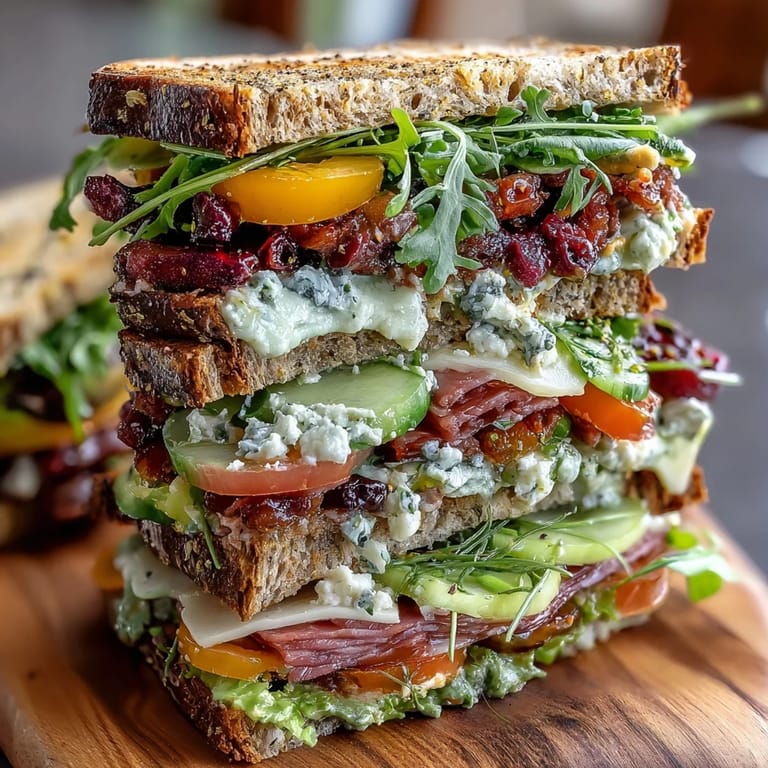
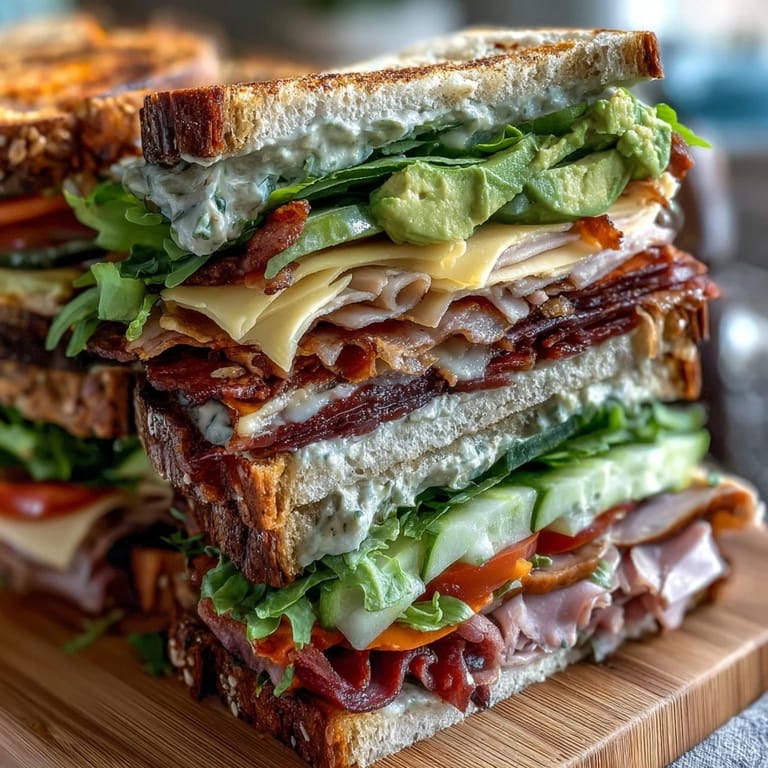
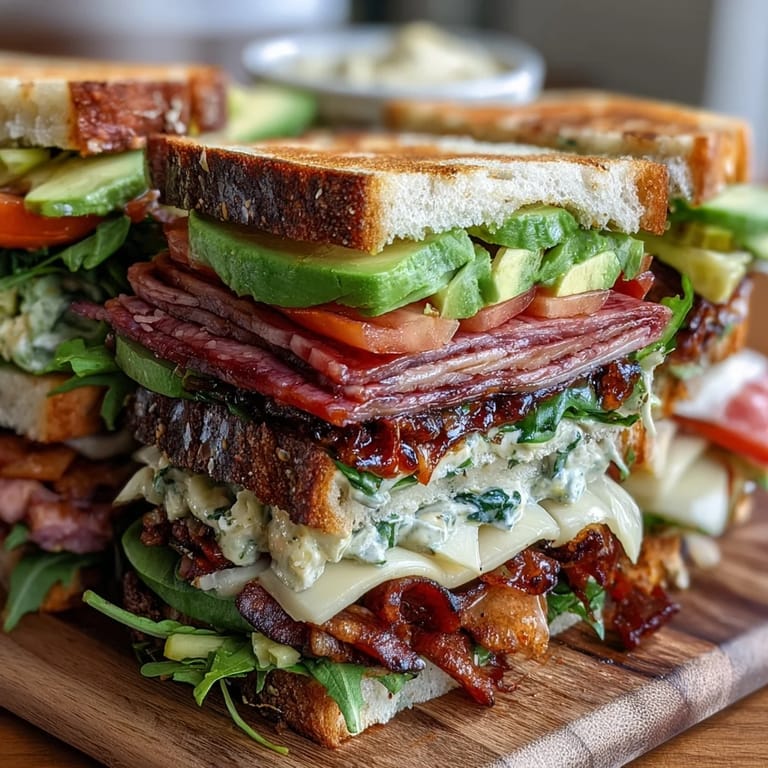
I watched my friend's teenage son load his bread with almost everything at once, creating this towering, slightly ridiculous sandwich that somehow worked perfectly. His younger sister made three different tiny sandwiches with surgical precision, each one themed differently. That's when I realized this board isn't just about food—it's about giving people permission to play with what they're eating, to make choices that feel uniquely theirs.
Ingredients
- Ciabatta rolls: They hold up beautifully without getting soggy, and their slight airiness makes them feel a bit special without being pretentious about it.
- Whole grain and sourdough: Mix textures and flavors so there's something for the purists and the adventurous folks too.
- Smoked turkey, honey ham, roast beef, and salami: The variety matters more than quantity—thin slices from a good deli counter go further than you'd think and taste infinitely better than pre-packaged.
- Swiss, cheddar, and provolone: These three have totally different personalities, so everyone finds their match; Swiss is subtle, cheddar assertive, provolone sits somewhere in the middle.
- Fresh tomatoes and cucumber: Slice these just before serving or they'll weep onto everything, which I learned the hard way at my first board gathering.
- Red onion and romaine: The onion brings unexpected bite, while crisp lettuce keeps textures interesting.
- Avocado and olives: These add richness and a slightly briny contrast that keeps things from feeling one-note.
- Dill pickles: Trust me, someone will want these, and they prevent the whole board from tasting too rich.
- Mayonnaise, Dijon mustard, hummus, pesto, and honey mustard: Offer variety in spread flavors so people can actually taste different combinations; hummus and pesto pull in the vegetable-leaning folks too.
- Peppers, olives, and sun-dried tomatoes: These are the finishing touches that make everything feel intentional rather than just thrown together.
Tired of Takeout? 🥡
Get 10 meals you can make faster than delivery arrives. Seriously.
One email. No spam. Unsubscribe anytime.
Instructions
- Set your stage with bread:
- Arrange all your bread varieties in a casual but organized way across your largest board or platter—you want people to see everything at a glance and feel excited about choices. Think of it like creating visual lanes that lead people naturally through their decision-making process.
- Build your protein and cheese sections:
- Group the sliced meats and cheeses in their own little neighborhoods on the board, keeping them slightly separated so flavors don't muddy together before anyone even picks up their bread. A thin piece of parchment between sections helps prevent any sogginess from seeping sideways.
- Scatter fresh vegetables strategically:
- Arrange tomatoes, cucumber, lettuce, spinach, and avocado in a way that makes them look abundant and fresh—this is where the board actually becomes visually stunning. If you're worried about wilting, keep delicate items separate in small bowls that guests can grab from as they build.
- Create a condiment station:
- Pour your spreads into small bowls with the back of a butter knife or small spoon resting in each one so people can taste as they go without double-dipping. This detail actually prevents the spreading chaos that derails boards at parties.
- Add the finishing flourishes:
- Scatter pickles, olives, banana peppers, and sun-dried tomatoes across open spaces—these aren't just flavor boosters, they make the whole thing look intentionally composed rather than random. They also give people those little flavor surprises that make them say things like, oh, that's good.
- Set it out and step back:
- Once everything's arranged, give yourself a moment to look at it, maybe adjust a section that looks sparse, then let people have at it. The whole point is that you're done with the heavy lifting, so actually enjoy watching people create what they want.
 Pin this
 What started as a quick fix for an afternoon gathering has become my go-to move for almost any casual entertaining situation. There's something about watching people light up when they see all the possibilities, knowing they get to make exactly what they want, that never gets old.
The Art of Board Arrangement
I used to throw everything randomly on the board, and it always looked chaotic no matter how nice the ingredients were. Then I started thinking about color, texture, and how people's eyes actually move across a surface, and suddenly the board started looking almost intentionally designed. The trick isn't about being precious—it's about recognizing that a little visual thinking makes people feel like they're choosing from something special rather than a pile of stuff.
Making This Work for Different Diets
The beauty of this format is that it naturally accommodates people with different eating preferences without anyone feeling like they're eating sad, separate food. Vegetarians can load up on hummus, vegetables, and cheese without anyone noticing they skipped the meat, while people avoiding dairy or gluten can build their own versions using the alternatives you've quietly included.
Transport and Timing Tips
The first time I made this for a picnic, I arranged everything at home then packed it in layers, and by the time we got to the park, the bread was slightly crushed and the lettuce looked sad. Now I transport everything in separate containers and assemble the board on-site, which takes maybe five extra minutes and completely changes the outcome. Your fresh components stay crisp, your breads stay intact, and you get that beautiful wow moment when everyone sees the board for the first time in its full glory.
- Pack breads in a separate container with parchment between layers to prevent crushing.
- Transport vegetables and meats in sealed containers and arrange them on the board at your destination.
- Keep spreads, olives, and pickles in covered containers so they don't spill during transit.
 Pin this
 This board has become my answer to the question, what should we do this weekend, because it turns any gathering into something that feels both generous and low-stress. It's the kind of thing that reminds you entertaining doesn't have to be complicated to feel meaningful.
Recipe FAQs
- → How should I arrange the deli ingredients on the board?
Arrange breads, meats, cheeses, vegetables, spreads, and extras in separate sections to showcase variety and allow guests to build with ease.
- → What spreads work best for this sandwich board?
Mayonnaise, Dijon mustard, hummus, pesto, and honey mustard offer a good range of creamy and tangy options for layering flavors.
- → Can I prepare the board in advance?
Yes, prepare components separately and refrigerate. Assemble the board shortly before serving to keep ingredients fresh.
- → What vegetarian alternatives can I include?
Add grilled vegetables, sliced hard-boiled eggs, or plant-based deli slices for variety without meat.
- → Which breads are recommended for a balanced spread?
Ciabatta, whole grain sandwich rolls, and sourdough bread provide texture and flavor variety for this assortment.
- → What are suitable sides to accompany this board?
Complement the board with chips, fresh fruit, or pasta salad to round out the meal.