 Pin this
 My friend Marcus brought a pot of his grandmother's Hoppin John to a New Year's potluck, and I watched everyone gravitate toward it like it was the only dish that mattered. Years later, when I went vegetarian, I realized I'd been missing out on actually understanding why that dish held such power. So I set out to recreate it without the meat, leaning hard on smoked paprika and time to build that same soul-warming depth. The first batch taught me that you don't need to abandon tradition to honor your values—you just need to listen to what the spices are telling you.
I made this for my partner on a quiet Thursday night when neither of us felt like ordering takeout, and something shifted in how they saw vegetarian cooking. They went back for seconds without even realizing it, then asked me to write down the recipe because they wanted to make it themselves. That's when I knew I'd nailed it—when people stop thinking about what's missing and just enjoy what's there.
Ingredients
- Olive oil: Use a good quality one since it's your foundation for developing the vegetables, not something to skimp on.
- Onion, green bell pepper, and celery: This is your holy trinity of Southern cooking, and dicing them roughly the same size means they'll cook evenly and give you consistent texture.
- Garlic: Mince it fresh and add it after the softer vegetables have had their time, so it doesn't burn and turn bitter on you.
- Black-eyed peas: Canned and rinsed is perfectly fine here—it saves time without sacrificing flavor or nutrition.
- Smoked paprika: This is your secret weapon for depth; it's doing the work that traditionally came from ham hock or bacon, so don't hold back.
- Dried thyme, oregano, and cumin: Together they build warmth and earthiness that makes the dish feel complete and intentional.
- Cayenne pepper: Start with the optional amount and adjust based on how much heat you enjoy, since it changes the personality of the dish.
- Bay leaves: They infuse quietly in the background and should be removed before serving because nobody wants to bite into one.
- Vegetable broth: Low-sodium lets you control the salt level and taste the spices without everything tasting flat.
- Soy sauce or tamari: A tablespoon adds savory umami that makes the whole thing taste more developed and less one-note.
- Rice: Long-grain white or brown works equally well; the rice is your vehicle for soaking up all that flavorful liquid.
- Fresh parsley, cilantro, and green onions: These finish the dish with brightness and freshness, cutting through the richness and reminding you that it's meant to feel alive.
Tired of Takeout? 🥡
Get 10 meals you can make faster than delivery arrives. Seriously.
One email. No spam. Unsubscribe anytime.
Instructions
- Build your flavor base:
- Heat the olive oil in a large pot over medium heat and add your diced onion, bell pepper, and celery. Let them soften for five to six minutes, stirring every so often so they color lightly but don't brown—you want them tender and translucent, releasing their sweetness into the oil.
- Wake up the garlic:
- Stir in your minced garlic and cook for just one minute until the smell hits you and you know it's ready. This brief moment prevents the garlic from burning while letting it perfume the whole pot.
- Toast your spices:
- Add the smoked paprika, thyme, oregano, cumin, cayenne if you're using it, black pepper, and salt all at once. Stir constantly for about thirty seconds so the spices bloom in the hot oil and release their essential oils—you'll actually smell the difference in the kitchen.
- Bring everything together:
- Pour in your drained black-eyed peas, vegetable broth, and soy sauce, then add the bay leaves. Stir until everything is evenly combined and the spices are distributed throughout.
- Let it simmer:
- Bring the pot to a gentle simmer, then reduce the heat to medium-low and cook uncovered for twenty to twenty-five minutes, stirring occasionally. You're waiting for the mixture to thicken slightly and for all the flavors to meld together into something bigger than their individual parts.
- Taste and adjust:
- Remove the bay leaves first so you don't accidentally bite one, then taste a spoonful and decide if you need more salt, heat, or seasoning. This is your moment to make it yours.
- Serve with intention:
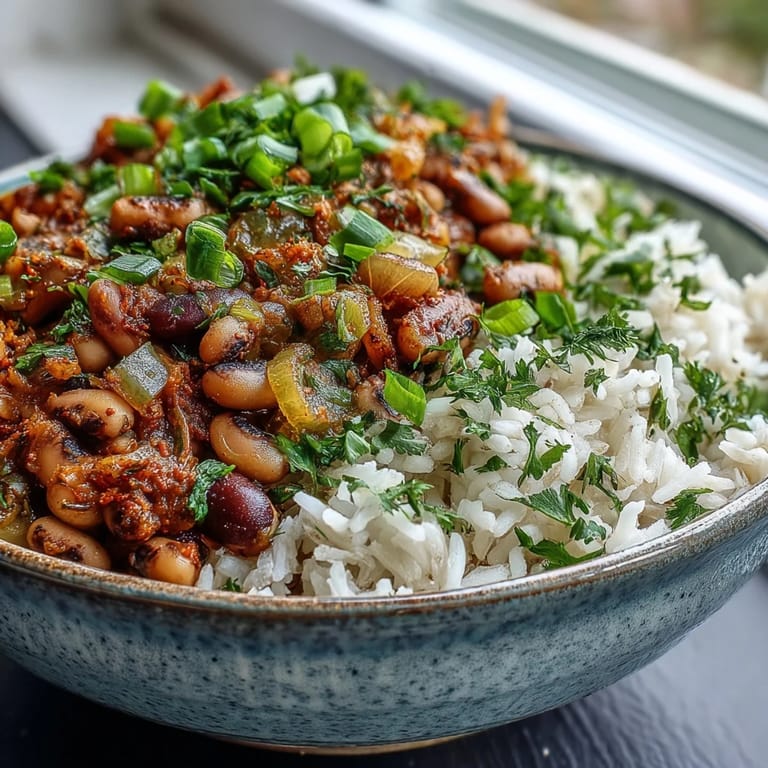
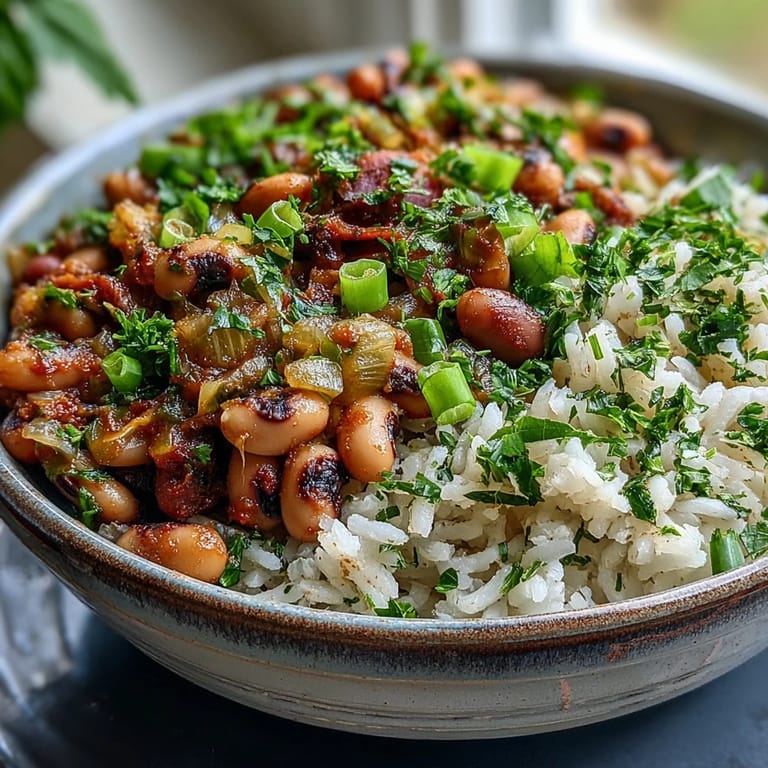
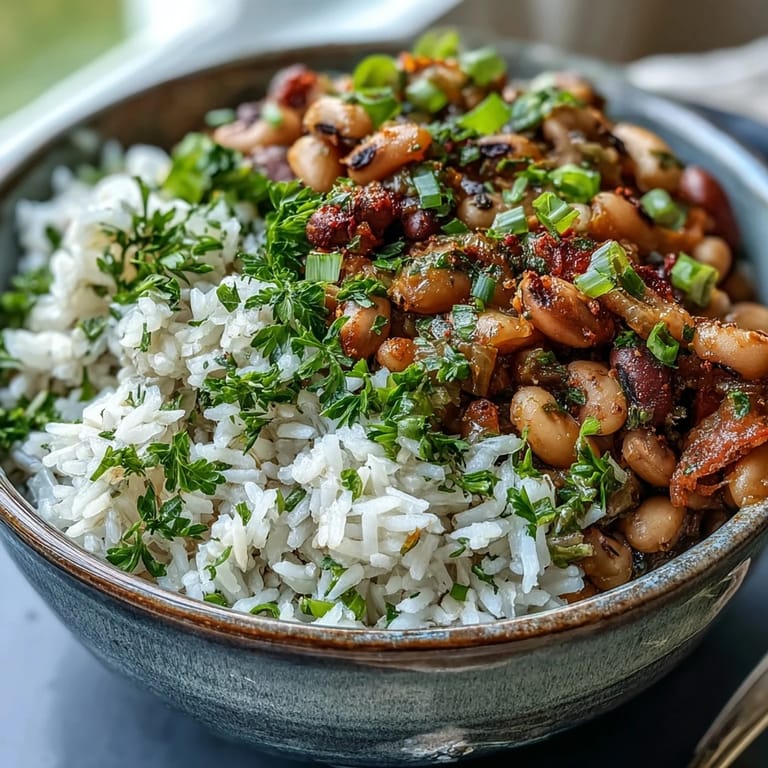
- Spoon the Hoppin John generously over warm rice, then scatter fresh herbs and green onions on top and squeeze a lemon wedge over everything if you want that brightness. The contrast of warm and fresh, spiced and bright, is what makes this dish sing.
 Pin this
 There's a moment in cooking when you stop following directions and start trusting your instincts, and that's usually when the food becomes something worth remembering. This dish taught me that about vegetarian cooking, that it's not about replacing something lost but about discovering what was always possible.
Why This Works Without Meat
The smoked paprika carries the weight that traditionally came from bacon or ham, providing depth and a whisper of smoke that your brain registers as richness. The combination of spices—cumin, thyme, and oregano—creates a complexity that feels savory and substantial, so your palate is satisfied and engaged. Black-eyed peas have enough body and protein that the dish never feels light or incomplete, especially when served over rice.
Timing and Temperature Matter
I learned the hard way that rushing this dish by cooking it on high heat creates a watery, separated mess instead of a cohesive, thickened stew. Medium-low heat and patience let the flavors actually integrate rather than just existing in the same pot. The twenty-five-minute simmer is a guideline, not a law—if your stove runs hot, check it at twenty minutes and adjust from there.
Make It Your Own
This recipe is a framework, not a prison, and some of my favorite versions have come from improvisation and curiosity. I've added diced tomatoes for brightness, swapped in kidney beans when black-eyed peas weren't available, and even stirred in a splash of apple cider vinegar near the end for acidity. The core stays the same—vegetables, legumes, spices, broth—but the details can dance around based on what you have and what you're craving.
- Add a teaspoon of liquid smoke or swap cayenne for chipotle powder if you want even deeper smokiness.
- Serve alongside collard greens or a hot sauce of your choice to round out the Southern experience.
- Leftovers keep for three days in the refrigerator and actually taste better the next day once everything has had more time to know each other.
 Pin this
 This dish has become my answer to the question of whether vegetarian food can be truly satisfying, and the answer is a resounding yes. Make it once and you'll understand why it's lasted as a tradition for generations—because it tastes like home, no matter how you make it.
Recipe FAQs
- → What makes this vegetarian version authentic?
The smoked paprika and combination of thyme, oregano, and cumin provide the traditional smoky depth that usually comes from pork. The soy sauce adds umami richness while maintaining the classic flavor profile.
- → Can I use dried black-eyed peas instead?
Yes, soak one cup dried peas overnight, then cook them for about 45 minutes until tender before adding to the vegetable mixture. Adjust cooking time accordingly.
- → How long does this keep in the refrigerator?
Store in an airtight container for up to five days. The flavors continue to develop and taste even better the next day. Reheat gently with a splash of water or broth.
- → What side dishes pair well?
Collard greens, cornbread, or a simple green salad complement this beautifully. Hot sauce and pickled vegetables make excellent toppings for added brightness and heat.
- → Is this suitable for meal prep?
Absolutely. The dish reheats beautifully and can be portioned into containers for easy lunches throughout the week. Store rice separately if you prefer fluffier results when reheating.
- → Can I make it spicier?
Increase the cayenne pepper or add hot sauce to taste. For a different heat profile, try chipotle powder instead of cayenne for smoky spice intensity.