 Pin this
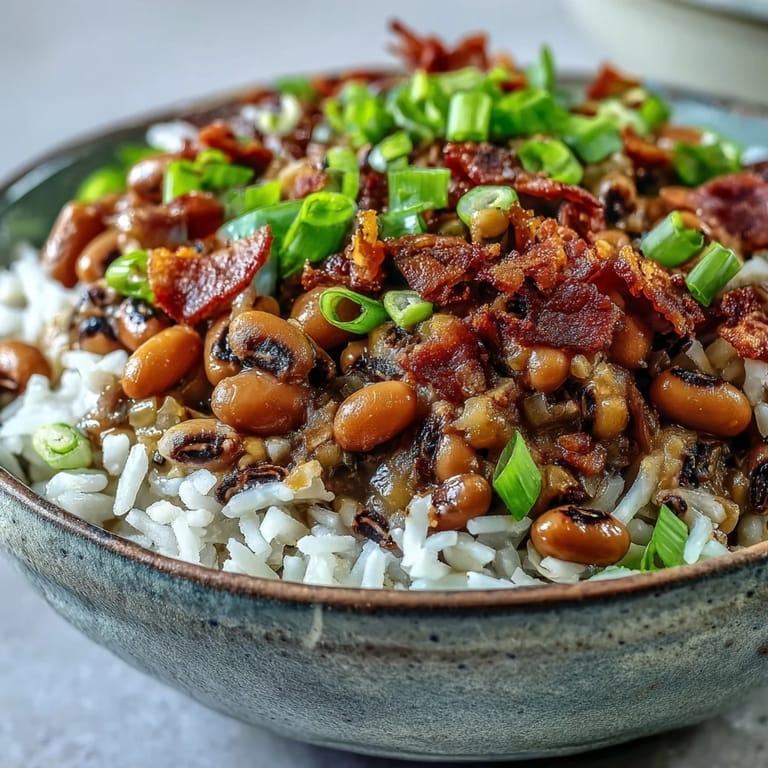
 My grandmother's kitchen smelled like bacon grease and possibility on New Year's Eve, the kind of smell that made you believe in luck before you even tasted a bite. She'd have me help her sort through the dried black-eyed peas the night before, picking out any stones, and I remember asking why we couldn't just eat them straight from the can like normal people. She'd laugh and say that was the whole point—that the work itself was part of what brought the good fortune. Hoppin John isn't just a dish; it's a ritual dressed up as dinner, and once you make it, you'll understand why families have been starting their years with it for generations.
Years ago, I made this for a group of friends who'd never had Hoppin John before, and watching their faces when they realized it was just peas and rice made me understand why comfort food matters. One friend went back for thirds and kept shaking her head like I'd performed some kind of magic trick with a pot and a wooden spoon. That's when it clicked—this dish isn't fancy, but it carries weight, tradition, and somehow tastes like home even if you've never been to the South.
Ingredients
- Bacon: Use thick-cut if you can find it; it renders down to pure flavor and won't disappear into the peas.
- Black-eyed peas: Soaking overnight matters more than you'd think—it softens them evenly so you won't have some mushy and some still tough.
- Onion, celery, garlic: This trio is where the actual flavor lives; don't rush the chopping or the sautéing.
- Chicken or vegetable broth: Low-sodium lets you control the salt and keeps the delicate bean flavor front and center.
- Bay leaf and thyme: These two work quietly in the background, adding depth that you can't quite name but absolutely notice when they're missing.
- Long-grain white rice: It stays fluffy and separate, which is the whole point—you want contrast between the creamy peas and the distinct grains.
- Scallions: They're not just garnish; that fresh, bright bite wakes up every spoonful.
Tired of Takeout? 🥡
Get 10 meals you can make faster than delivery arrives. Seriously.
One email. No spam. Unsubscribe anytime.
Instructions
- Render the bacon:
- Dice it thick and let it go slowly over medium heat until the edges curl and the fat turns golden and smells absolutely incredible. You'll know it's done when you can hear the sizzle without seeing it bubble—that's when you know the water's cooked out and the flavor's concentrated.
- Build your flavor base:
- Once you pull out half the bacon, add your onion, celery, and pepper to all that rendered fat and let them get soft and fragrant. This is where patience pays off; five minutes of gentle sautéing creates the foundation that makes people ask what you put in here.
- Simmer the peas:
- Pour in the broth with your soaked peas, add the bay leaf and thyme, then bring it to a boil before backing off the heat. Watch them simmer—they should look gently bubbling, not aggressive, and after 35-45 minutes they'll be tender but still holding their shape, not falling apart into mush.
- Cook the rice alongside:
- While the peas are doing their thing, combine rice, water, butter, and a pinch of salt in a separate pot and bring to a boil. Lower the heat to the absolute minimum, cover it, and let it sit undisturbed for 15 minutes—don't lift that lid or you'll let the steam escape and dry it out.
- Finish and serve:
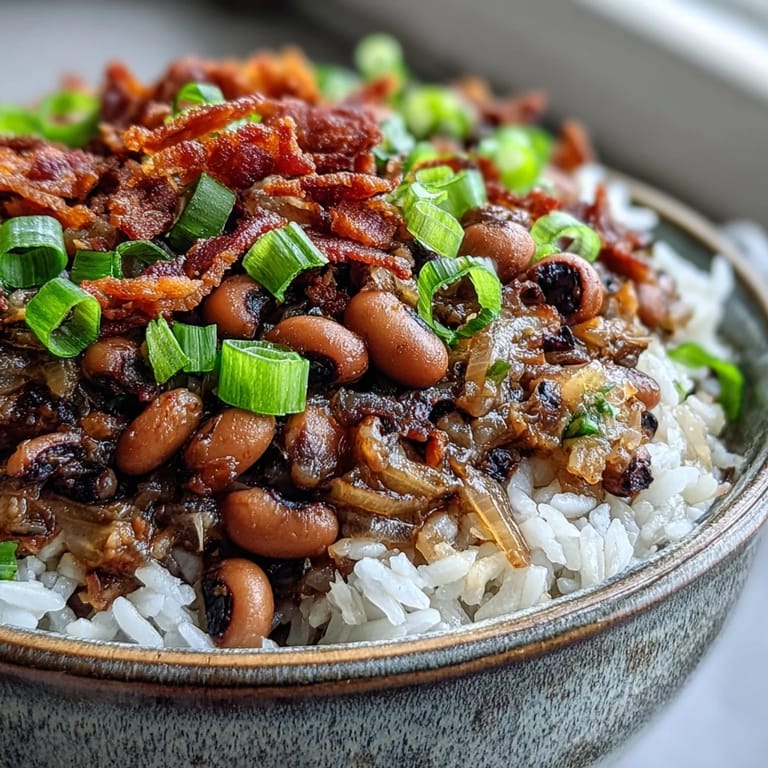
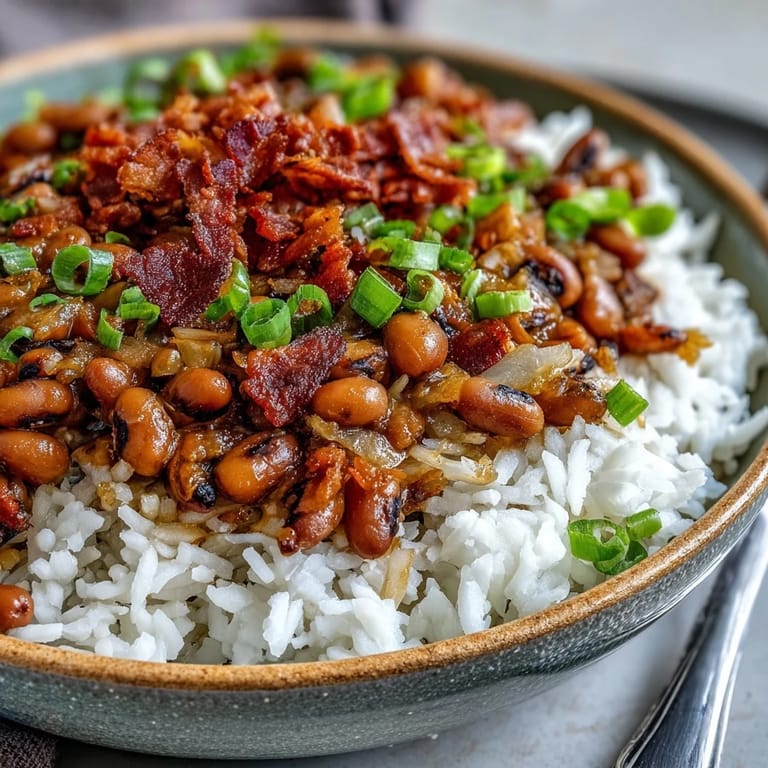
- Fluff the rice with a fork, nestle it on a plate, and pour the peas generously on top with all their broth. Crown it with that reserved crispy bacon and some bright scallions, and if you like heat, a shake of hot sauce.
 Pin this
 My friend Sarah came over for dinner the first time I served her Hoppin John on January second, and she said, "Wait, this is it? This is the lucky thing?" By the end of the meal, she was already thinking about when she could make it next. That moment taught me that tradition doesn't need to be complicated to be powerful.
Why This Dish Matters
Hoppin John exists because resourceful people took what they had—scraps, dried legumes, garden vegetables—and made something that nourished and connected them. It became a New Year tradition because eating black-eyed peas is supposed to bring prosperity, and somewhere along the way, people realized that the real luck was having someone to share it with. Making this dish roots you in something bigger than Tuesday night dinner.
Making It Your Own
The beauty of this recipe is that it welcomes small changes without falling apart. Some people add a green bell pepper for sweetness, others stir in diced tomatoes at the end, and vegetarians swap the bacon for smoked paprika and extra butter. The structure stays solid while the details adapt to what you have on hand or what you're craving that particular year.
Serving and Pairing
Hoppin John tastes best when it's part of a bigger spread—the kind of meal where you linger at the table and everyone brings something. Cornbread is non-negotiable, buttery and slightly sweet to balance the savory peas. Sautéed collard greens add earthiness, and a simple green salad brings brightness; together, they create a meal that feels both humble and celebratory.
- Make extra rice because people pile it higher than they think they will.
- If your peas look too thick at the end, add a splash of broth; they should spoon over rice, not sit stiffly on top.
- Leftover Hoppin John reheats beautifully and actually tastes better the next day when all the flavors have settled into each other.
 Pin this
 There's something quietly powerful about stirring a pot of Hoppin John on the first day of a new year, knowing you're part of a tradition that stretches back further than you can trace. Serve it with intention, share it generously, and maybe the luck will catch.
Recipe FAQs
- → Why is Hoppin John eaten on New Year's Day?
Hoppin John is a Southern tradition believed to bring good luck and prosperity in the new year. The black-eyed peas represent coins, while the collard greens often served alongside symbolize paper money. Eating this dish on January 1st is thought to ensure a year of abundance and fortune.
- → Can I make Hoppin John vegetarian?
Absolutely. Simply omit the bacon and use smoked paprika or liquid smoke to add that essential smoky flavor. You can also sauté the vegetables in olive oil or butter instead of bacon drippings. Many vegetarians find the dish just as satisfying with these simple adjustments.
- → Do I need to soak dried black-eyed peas?
Yes, dried black-eyed peas should be soaked overnight to ensure even cooking and proper texture. If you're short on time, you can use the quick-soak method: boil the peas for two minutes, then let them soak for an hour off the heat. Alternatively, canned black-eyed peas work well and reduce the cooking time significantly.
- → What should I serve with Hoppin John?
Traditional Southern accompaniments include collard greens, cornbread, and sliced tomatoes. The dish pairs beautifully with fried okra or macaroni and cheese for a full Southern feast. Some families also serve it with chow-chow relish or pickled peppers for added tang and crunch.
- → How long will leftovers keep?
Hoppin John stores well in the refrigerator for up to four days when kept in an airtight container. The flavors often improve after a day or two as the ingredients meld together. You can also freeze it for up to three months—just reheat gently with a splash of broth to restore the creamy texture.
- → Why is it called Hoppin John?
The origin of the name is debated, but one popular story suggests it comes from an old Southern custom where children would hop around the table before eating the dish. Another theory traces it to the French term 'pois à pigeon' (pigeon peas), which evolved phonetically over time. Regardless of its name's origin, the dish has been a Southern staple since the 1800s.