 Pin this
 My grandmother used to say that the smell of black-eyed peas on New Year's Day was better than any alarm clock. One January morning, I woke up at her house to that exact smell—earthy, smoky, and impossibly welcoming—and realized this wasn't just a dish, it was a ritual. She'd been simmering those peas since dawn, and by the time we gathered around the table, the whole house had transformed into something that felt like luck itself. That's when I understood why people actually believe in the magic of this humble bowl.
I made this for my roommates on New Year's Eve once, and they showed up skeptical, asking if I was really serving "just peas." Two bowls in, they were quiet, the kind of quiet that means something real is happening at the dinner table. One of them went back for thirds and asked for the recipe before midnight even hit. That's when I knew this dish wasn't about luck or tradition—it was about feeding people something that actually matters.
Ingredients
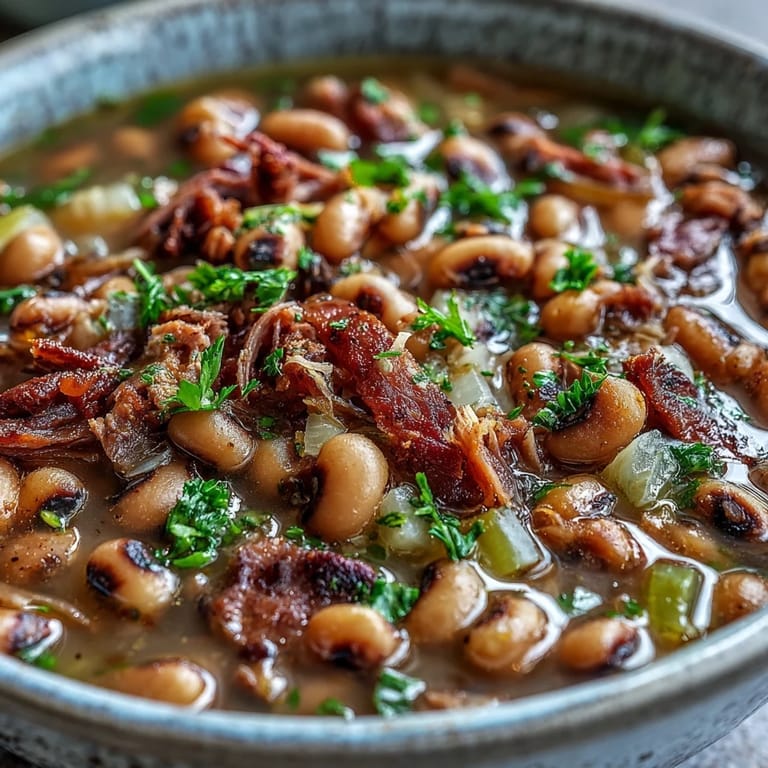
- Black-eyed peas: Dried peas have more character than canned, and they'll absorb all those smoky flavors like they were made for each other.
- Smoked pork neck bones or ham hocks: This is where the magic lives—the bone adds depth, and the smoke creates a savory base that broth alone could never achieve.
- Onion, celery, and bell pepper: This holy trinity builds flavor from the ground up, and the peppers add a subtle sweetness that balances the smokiness perfectly.
- Garlic: Just enough to remind you this is alive and real, not a flavor you can miss.
- Creole seasoning: The backbone of the whole dish—it brings warmth and complexity without drowning out the other players.
- Bay leaf and thyme: These herbs whisper in the background, creating layers you'll taste but never quite identify.
- Smoked paprika: A small amount that amplifies everything around it, like it's turning up the volume on the entire pot.
Tired of Takeout? 🥡
Get 10 meals you can make faster than delivery arrives. Seriously.
One email. No spam. Unsubscribe anytime.
Instructions
- Soak your peas the night before:
- Cover them with water and let them sit overnight—this softens them and makes them cook faster. If you're in a hurry, pour boiling water over them and wait an hour instead, but overnight is worth the patience.
- Build your base:
- Heat a little oil in your pot and sauté the onion, celery, and bell pepper until they're soft and the kitchen smells incredible. This is where everything starts—don't rush it, just let them get to know each other for about five minutes.
- Wake it up with garlic:
- Add your minced garlic and stir for a minute until it's fragrant—you're looking for that moment when your nose catches something special.
- Add everything at once:
- The pork, the drained peas, the liquid, and all those seasonings go in together. Stir it gently, like you're tucking a blanket around something precious.
- Let it simmer:
- Bring it to a boil, then lower the heat to a gentle bubble and cover it. Check on it every 20 minutes or so, giving it a stir, but mostly just let it do its thing for about an hour and a half until the peas are tender enough to break with a spoon.
- Deal with the bones:
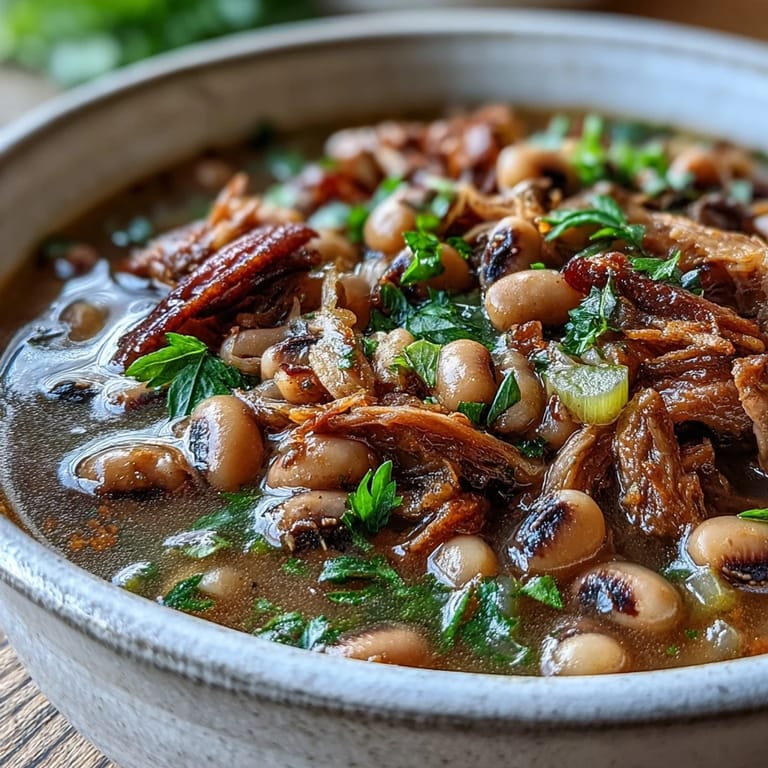
- Pull out the pork neck bones, shred any meat that's fallen off, and return just the meat to the pot. Discard the bones and any excess fat that's sitting on top.
- Taste and adjust:
- Add salt to taste, remove the bay leaf, and take a moment to appreciate what you've created before serving.
 Pin this
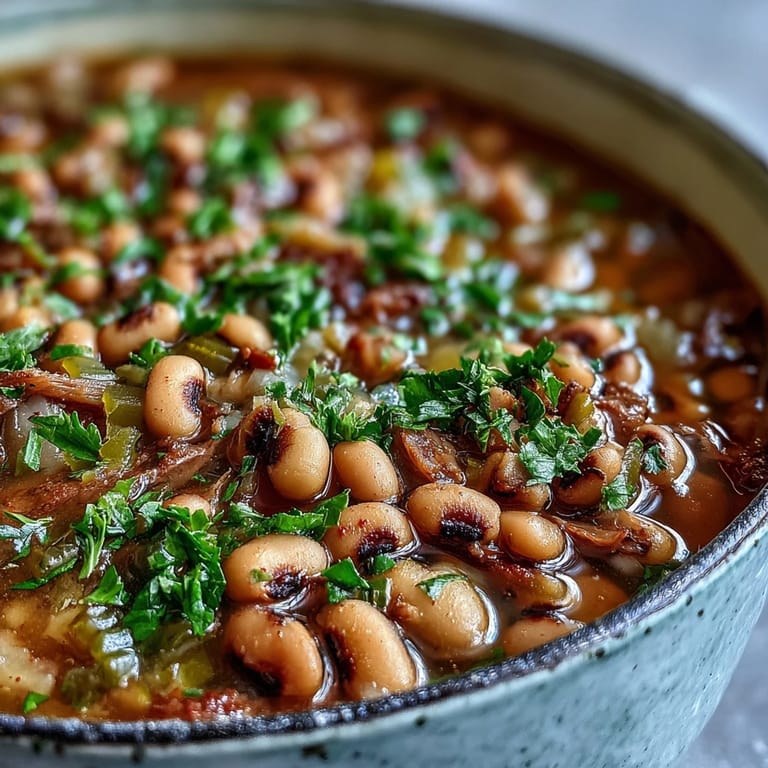
 There's a moment, maybe 45 minutes into cooking, when you walk past the pot and realize the whole smell has changed—it's become something richer, deeper, almost unrecognizable from where it started. That's when you know the magic is actually happening. My friends call it the point of no return, because that's when everyone suddenly decides to stay for dinner.
The Story Behind the Tradition
Black-eyed peas on New Year's Day aren't just Southern superstition—they're a thread connecting families across generations and regions. The tradition comes from the belief that the round shape of the peas symbolizes coins, and eating them on January 1st brings prosperity for the whole year ahead. Whether you believe in that magic or not, there's something powerful about sitting down to a meal that thousands of families are eating at the same exact time, all hoping for something better. The dish has evolved from enslaved African Americans' resourcefulness into one of the most treasured comfort foods in America, and every time you make it, you're part of that story.
Timing and Patience
This recipe rewards patience in the best way possible. The soaking overnight isn't a burden—it's actually the secret that makes everything else easier and faster. The long simmer on low heat is where flavor builds, where the pork releases its smokiness into the liquid, and where each pea absorbs not just the broth but the entire story of the pot. You could rush it, but why would you want to miss all those golden hours when the work is mostly done and the reward is simply showing up to stir occasionally?
Serving and Variations
Traditionally, this sits over a bed of rice, soaking up every drop of that precious broth, though cornbread on the side is equally essential—you'll need something to soak up the liquid that drips back onto your plate. Collard greens alongside complete the New Year's dinner trifecta, which is how my grandmother always served it. Some people add a splash of hot sauce, others add apple cider vinegar for a gentle tang, and a few brave souls I know crumble bacon on top (which I neither endorse nor judge). The beauty is that this dish is flexible enough to welcome whatever you have on hand while remaining entirely itself.
- For a vegetarian version, skip the pork and add smoked paprika and a teaspoon of liquid smoke to keep that depth of flavor.
- Leftover peas freeze beautifully for up to three months, so make extra and save your future self from cooking.
- If you accidentally overcook the peas into softness, that's not a failure—that's creamy pea soup territory, and some of the best bowls I've had have been exactly that.
 Pin this
 This dish has a way of becoming more than food—it's an anchor point in the year, a reminder that some traditions exist because they work. Make it once and you'll understand why people keep making it.
Recipe FAQs
- → Why are black-eyed peas eaten on New Years Day?
Black-eyed peas represent coins and prosperity in Southern folklore. Eating them on New Years Day is believed to bring good luck and financial fortune for the coming year, a tradition dating back to the Civil War era.
- → Do I need to soak dried black-eyed peas before cooking?
Yes, soaking overnight helps the peas cook evenly and tenderize. For a quicker method, cover them with boiling water and let sit for one hour before draining and proceeding with the dish.
- → What cuts of smoked meat work best?
Smoked pork neck bones provide exceptional flavor, but smoked ham hocks or smoked turkey parts work wonderfully too. The meat becomes fork-tender during slow simmering and adds deep smoky essence.
- → Can I make this vegetarian?
Absolutely. Simply omit the pork and enhance smokiness with additional smoked paprika plus a splash of liquid smoke. Use vegetable broth instead of chicken broth for a completely plant-based version.
- → What should I serve with black-eyed peas?
Classic accompaniments include fluffy white rice, buttery cornbread, and collard greens with bacon. The trio represents luck, wealth, and prosperity in Southern New Years tradition.
- → How long do leftovers last?
Store cooled leftovers in airtight containers for up to five days in the refrigerator. The flavors continue developing over time. You can also freeze portions for up to three months.