 Pin this
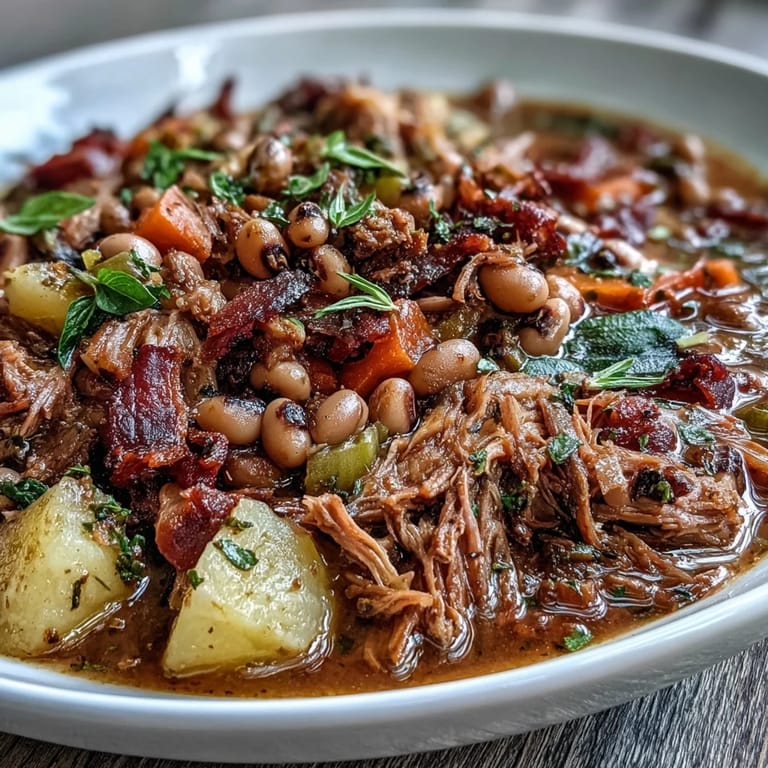
 There's something about the smell of ham hocks simmering with black-eyed peas that instantly transports me to a kitchen filled with warmth and anticipation. My grandmother used to make this stew on New Year's Day, claiming the peas brought luck for the year ahead, though honestly I think the real magic was in how the smoky broth transformed humble ingredients into pure comfort. The first time I attempted it myself, I nearly skipped the overnight soak and lived to regret the rock-hard peas at dinner time. Now whenever I make it, I'm reminded that some shortcuts aren't worth taking, and patience with this dish pays dividends in flavor and texture that no rushing can replicate.
I made this for a dinner party last February when snow had trapped us all indoors, and watching my friends wrap their hands around warm bowls while the windows fogged up from steam felt like we'd stumbled into something sacred. One guest confessed she'd never had black-eyed peas before and ate three bowls, which I took as the highest compliment a cook could receive. That night reminded me that food doesn't need to be fancy to be memorable, just honest and made with intention.
Ingredients
- Smoked ham hocks (2, about 1.5 lbs): These are the soul of the stew, imparting a deep smoky richness that can't be replicated with bacon or other cuts of pork, so don't substitute unless absolutely necessary.
- Dried black-eyed peas (2 cups): Soaking overnight is non-negotiable for even cooking, though canned peas work in a pinch if you add them during the last 30 minutes to prevent mushiness.
- Large onion, diced: The aromatic foundation that builds complexity, best diced relatively small so it softens completely into the broth.
- Carrots (2, peeled and diced): Their natural sweetness balances the saltiness of the ham hocks beautifully.
- Celery stalks (2, diced): This trio of onion, carrot, and celery is called mirepoix for a reason, creating the flavor base that makes everything taste intentional.
- Medium potatoes (2, peeled and cubed): Cut them no larger than one inch so they cook in time with the peas and absorb the broth.
- Diced tomatoes with juice (1 can, 14.5 oz): The acidity brightens the stew and prevents it from becoming too heavy, so don't drain them.
- Garlic cloves (3, minced): Added after the aromatic vegetables so it doesn't burn, bringing a sharp note that keeps the stew from tasting one-dimensional.
- Low-sodium broth (6 cups): Use chicken or vegetable depending on your preference, but low-sodium lets you control the salt and prevents the stew from becoming oversalted as it reduces.
- Bay leaves (2): These quiet flavor builders work their magic over hours of simmering, creating subtle depth you can't quite identify until they're removed.
- Dried thyme (1 teaspoon): Earthy and warm, it ties the whole composition together without shouting for attention.
- Smoked paprika (1/2 teaspoon): This adds complexity and visual warmth, reinforcing the smoky notes from the ham hocks.
- Black pepper (1/2 teaspoon): Freshly ground makes an actual difference in brightness and bite.
- Cayenne pepper (1/4 teaspoon, optional): A whisper of heat that some people won't detect but will wonder why the stew tastes so layered.
- Salt: Add only after the ham hocks have broken down and released their saltiness, or you'll end up overseasoning.
- Fresh parsley (2 tablespoons, chopped): A final garnish that adds color and a fresh herb note to cut through the richness.
Tired of Takeout? 🥡
Get 10 meals you can make faster than delivery arrives. Seriously.
One email. No spam. Unsubscribe anytime.
Instructions
- Prepare the peas:
- If using dried peas, submerge them in cold water the night before and let time do the work, then drain and rinse thoroughly before cooking. Canned peas skip this step entirely, but dried ones really do cook more evenly when given this head start.
- Build your aromatic base:
- Heat a splash of oil in your pot over medium heat and add the diced onion, carrots, and celery, letting them soften for about five minutes until they start to surrender. You'll know they're ready when the onion becomes translucent and the kitchen smells like the beginning of something delicious.
- Wake up the garlic:
- Stir in your minced garlic and cook for just one minute, letting it perfume the oil without browning. If it starts to turn golden, you've waited too long and it'll taste bitter rather than sweet.
- Layer everything in:
- Add the ham hocks, soaked peas, potatoes, tomatoes with their juice, broth, bay leaves, thyme, smoked paprika, black pepper, and cayenne if you're using it. Stir everything together so nothing sits lonely at the bottom of the pot.
- Simmer low and slow:
- Bring the mixture to a boil so you know everything is heated through, then reduce the heat to low, cover the pot, and let it bubble gently for about two hours. Stir occasionally so nothing catches on the bottom, and listen for that contented simmering sound that means you've made the right choice.
- Extract the ham:
- Once the peas are completely tender and the ham is practically falling apart, carefully remove the hocks and let them cool just enough to handle. Shred the meat away from the skin and bone, discarding the inedible bits, then return only the tender meat back to the pot.
- Finish and adjust:
- Taste the stew carefully and add salt if needed, remembering that it might already have plenty from the ham. If you prefer a thicker stew, simmer uncovered for another 10-15 minutes to let some liquid evaporate.
- Serve with intention:
- Remove the bay leaves, ladle into bowls, and finish with fresh parsley and hot sauce on the side for anyone who wants extra heat.
 Pin this
 This stew has a way of becoming a ritual, something you make when you need the kitchen to feel like home and everyone around you to feel cared for simultaneously. It's the kind of dish that turns a regular Tuesday night into something worth remembering.
Why This Stew Works
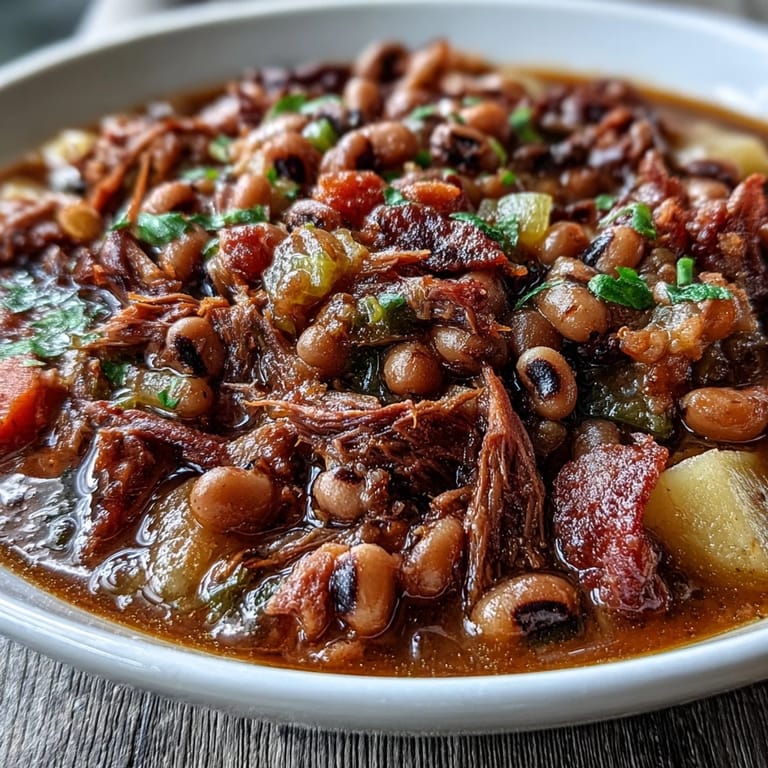
Black-eyed peas have a subtle earthiness that would disappear entirely without the smoky depth of ham hocks to anchor them, which is why this pairing feels less like a recipe and more like a natural law of cooking. The long simmer isn't just about tenderness, it's about time giving permission for all these distinct ingredients to become one coherent voice in the bowl. The vegetables melt into background support, the broth becomes silky from rendered fat and broken-down peas, and what started as a list of ingredients becomes pure comfort.
Storage and Reheating
Leftovers thrive in this stew more than in almost any other dish I make, as though the flavors need a day or two of quiet time in the refrigerator to settle into something even better. It keeps perfectly for three days in an airtight container, and reheats beautifully on the stovetop over medium heat with just a splash of water or broth if needed. Some people swear by freezing portions for up to three months, though I rarely have enough left over to test that theory.
Pairing and Serving Suggestions
The beauty of this stew is that it doesn't demand much accompaniment, though cornbread alongside feels almost ceremonial, letting you tear off pieces to soak up broth at the bottom of the bowl. I've also served it over steamed rice for people who wanted something under their stew, and over crusty bread for those who wanted something beside it. A simple green salad with a sharp vinaigrette cuts through the richness if you're feeding it for dinner rather than as a standalone comfort meal.
- Hot sauce passed at the table lets everyone calibrate their own heat level without you having to guess.
- Fresh parsley is optional but transforms the presentation from rustic to intentional with barely any effort.
- A squeeze of fresh lemon juice stirred in just before serving brightens everything without being detectable as citrus.
 Pin this
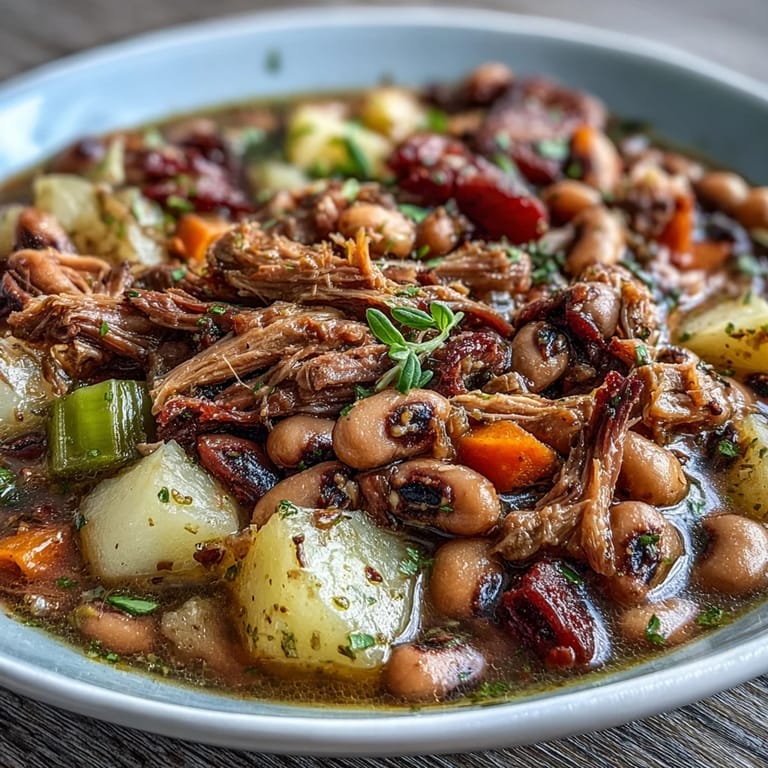
 This stew is proof that the best comfort food comes from letting time and heat and good ingredients do what they do naturally. Make it when you need your kitchen to feel full of purpose and your table to feel full of care.
Recipe FAQs
- → Do I need to soak dried black-eyed peas?
Yes, soak dried peas overnight in plenty of water. This ensures even cooking and tender results. Alternatively, use canned peas for a quicker version.
- → Can I make this in a slow cooker?
Absolutely. Sauté vegetables first, then add everything to the slow cooker. Cook on low for 6-8 hours or high for 3-4 hours until peas are tender.
- → How do I store leftovers?
Refrigerate in an airtight container for up to 3 days. The flavors actually improve overnight. Reheat gently on the stovetet, adding broth if needed.
- → What can I serve with this?
Cornbread is the classic pairing. It's also delicious over steamed rice or with crusty bread. A simple green salad balances the richness nicely.
- → Can I make it vegetarian?
Yes. Omit ham hocks and use vegetable broth. Add extra smoked paprika or liquid smoke to maintain the depth of flavor. Consider adding mushrooms for umami.
- → Why are my peas still tough after cooking?
This could be due to old peas, hard water, or acidic ingredients added too early. Ensure dried peas are fresh, and add tomatoes toward the end if encountering this issue.