 Pin this
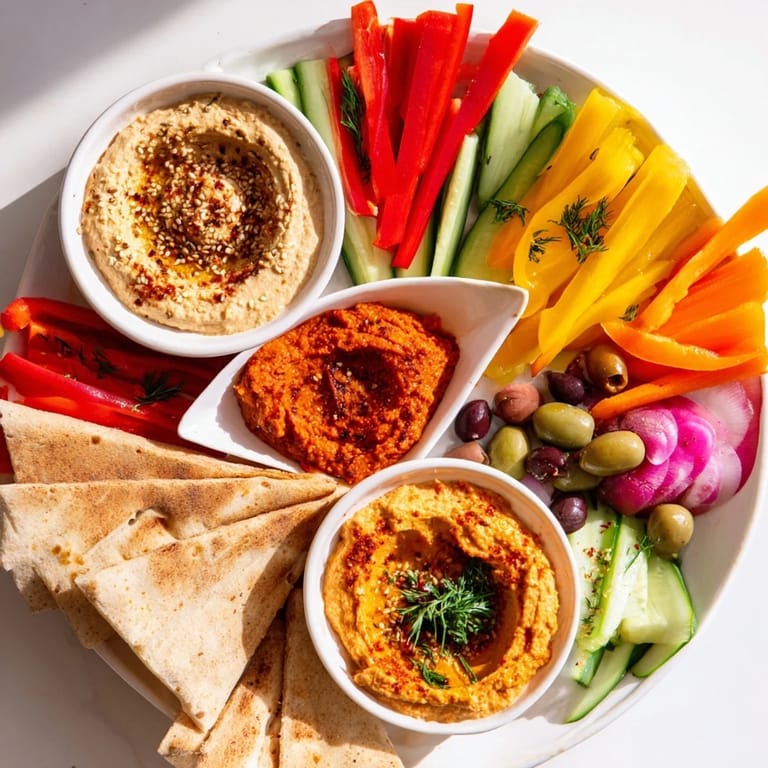
 My sister called it "the tent" the first time I served it at a summer gathering, and the name stuck. I'd been flipping through a book on Moroccan food, mesmerized by photographs of markets in Marrakech, when I realized I could recreate that sensory chaos on my own table. What started as scattered vegetables on a platter transformed into something architectural, almost whimsical—triangular points of color that made people lean in before they even tasted anything. It became my go-to when I wanted to impress without spending hours in the kitchen.
I remember one autumn evening when my neighbors stopped by unannounced, and I had just enough in my crisper to build this tent from scratch. Their kids started calling the pita triangles "tent flaps" and were actually excited to eat vegetables—something I'd never managed before. That moment taught me that presentation isn't shallow; it changes how people experience food, especially when it invites them to play with their plates.
Ingredients
- Cucumber: Slice lengthwise for those satisfying rectangular pieces that hold their shape and cool down the richness of the dips.
- Red and yellow bell peppers: Cut into strips so guests can grab them easily; they add natural sweetness and that crisp snap everyone craves.
- Carrots: Cut into sticks like fries so people feel like they're eating something fun, not "being healthy."
- Cherry tomatoes: Halving them prevents them from rolling off the platter and adds a burst of bright acidity.
- Red onion: Sliced thin so the color bleeds slightly into the platter and the sharpness balances the creamy dips.
- Radishes: These thin rounds add an unexpected peppery kick and look almost jewel-like on the plate.
- Pita or msemen: Warming them makes them pliable and aromatic; they become the edible vessels that tie everything together.
- Hummus: Buy quality or make your own—it's the foundation, so it matters.
- Muhammara: This roasted red pepper dip brings color and a subtle smokiness that feels luxurious but approachable.
- Baba ganoush: Silky and earthy, it offers a darker, more mysterious contrast to the brighter dips.
- Olives, sesame seeds, and spices: These finishing touches are what make people say "wow"—they add depth and signal that care went into this.
Tired of Takeout? 🥡
Get 10 meals you can make faster than delivery arrives. Seriously.
One email. No spam. Unsubscribe anytime.
Instructions
- Prep your canvas:
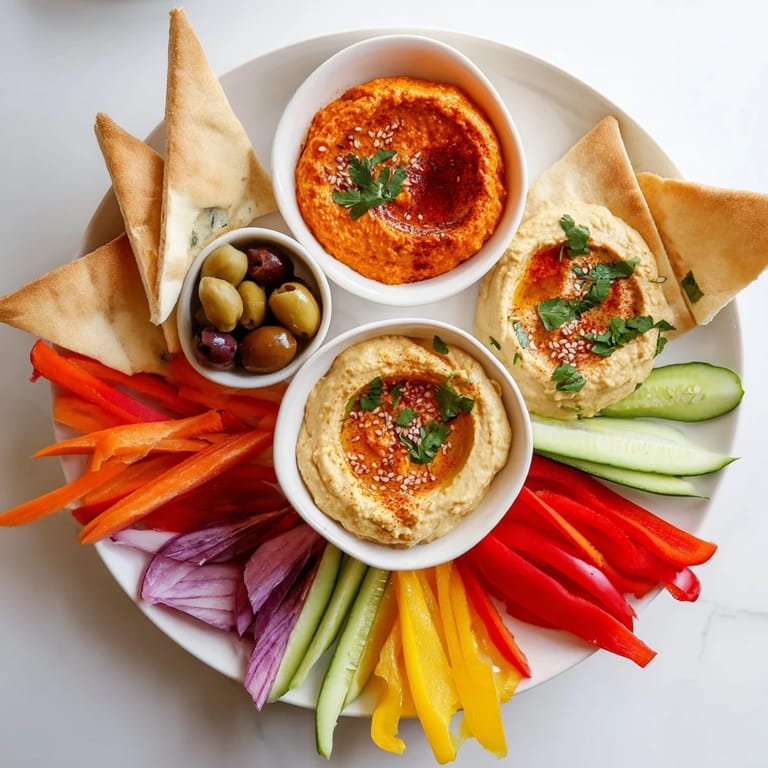
- Arrange vegetables in pointed triangular groupings, alternating colors so each section builds visual momentum—think of it like painting with produce. This doesn't need to be perfect; slight imperfections make it feel homemade and charming.
- Warm the bread:
- A quick warm in a dry skillet or oven brings out the aroma and makes the bread more supple for holding dips. Cut into triangles and fan them around the base like you're building an actual tent structure.
- Dress the dips:
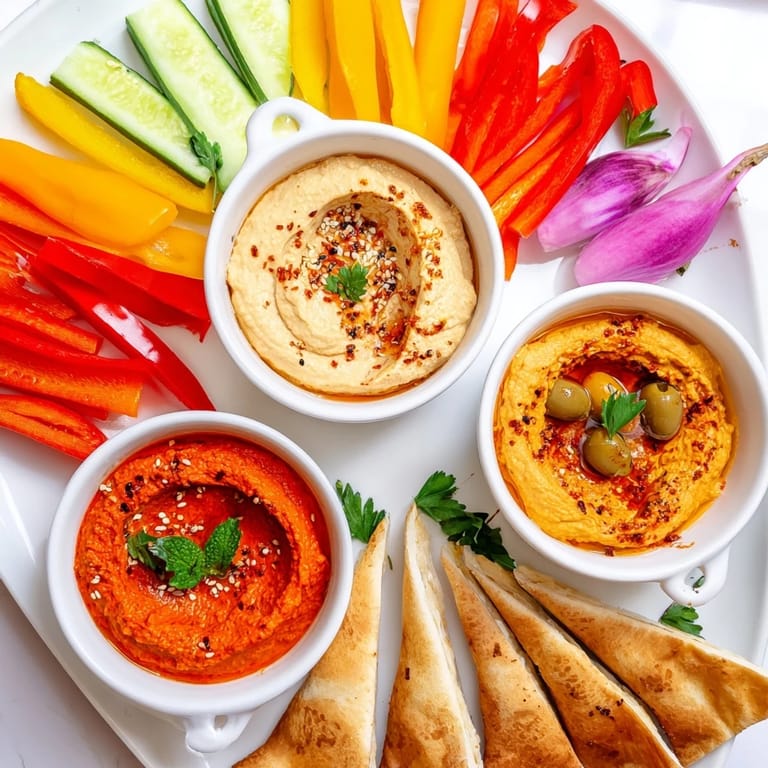
- Spoon each into its own small bowl and sprinkle with cumin, paprika, and sesame seeds so they look intentional and inviting. The spices aren't just flavor—they signal to guests that something special is happening here.
- Add the finishing flourish:
- Scatter olives and chopped cilantro across the arrangement like you're scattering petals, then step back and admire your work. This is where the tent truly comes alive.
- Serve with confidence:
- Bring it out warm so the bread still smells incredible and the spices are at their most fragrant. Invite people to tear, dip, and mix however they like.
 Pin this
 There was a moment at a dinner party when my usually picky eater nephew actually asked for seconds of baba ganoush, spreading it on pita with careful attention. He'd been drawn in by the tent presentation, and the dips did the rest. That's when I realized this platter isn't just food—it's permission to explore and play.
Building Your Tent Shape
The magic of this dish lives in the architecture. Arrange your vegetables in a pointed canopy by grouping similar vegetables into triangular sections that radiate outward from the center. Think of it less as a geometric puzzle and more as a landscape you're creating. The pointed peaks should lean inward like an actual tent frame, which guides eyes toward the dips at the base. Don't overthink it—asymmetry and slight imperfections make it feel more welcoming, not less. The arrangement is forgiving because people will happily dismantle it as soon as you set it down.
The Dips: Your Flavor Foundation
Each dip tells a different story, and they work best when they're still at room temperature or slightly warm. Hummus is the gateway—creamy, gentle, approachable. Muhammara brings warmth and complexity, with roasted peppers creating a subtle sweetness and smokiness. Baba ganoush is the mysterious one, earthy and deep, almost shadowy compared to the others. Together, they offer range without overwhelming. If you can't find muhammara or baba ganoush at your market, check Middle Eastern or specialty sections; they're increasingly available, and the few minutes of searching pays off. The spice garnishes—cumin, paprika, sesame—are what elevate these dips from groceries to intentional flavors.
Timing and Seasonality
This tent works year-round, but it shines in late spring and summer when vegetables are at their brightest. In cooler months, you can roast your vegetables lightly to deepen their colors and flavors, or add blanched green beans and snap peas for crunch. The preparation time never changes—it's the vegetables themselves that shift with seasons, keeping the dish feeling fresh no matter when you make it. I've brought this to picnics, potlucks, and casual weeknight gatherings, and it adapts beautifully to each moment.
- Add roasted chickpeas or marinated feta cubes for extra substance and surprise.
- Swap in blanched green beans, snap peas, or even thinly sliced fennel for vegetable variety.
- For a fully vegan version, verify all dips and breads are dairy-free and use oil-based garnishes.
 Pin this
 This tent has become my secret weapon for feeding people in a way that feels intentional without being fussy. It's proof that presentation and flavor don't require hours or complicated techniques.
Recipe FAQs
- → What types of vegetables are best for this platter?
Fresh, crisp vegetables like cucumber, bell peppers, carrots, cherry tomatoes, and red onion create a colorful and flavorful base for the platter.
- → Can I use other breads instead of pita or msemen?
Yes, you can substitute with other flatbreads or crackers that complement the dips and allow easy dipping.
- → How are the dips seasoned for this spread?
The dips—hummus, muhammara, and baba ganoush—are enhanced with ground cumin, smoked paprika, and toasted sesame seeds for added depth and aroma.
- → Is it possible to make a vegan version?
Definitely. Use dairy-free dips and check that breads are free from animal products to ensure a vegan-friendly platter.
- → What is the best way to present the platter?
Arrange vegetables in layered, pointed groupings to form a tent-like canopy, placing warmed flatbread at the base with dips centrally displayed for inviting appeal.
- → Can additional toppings be added?
Yes, extras like roasted chickpeas or marinated feta cubes add texture and variety to the platter.