 Pin this
 There's something about a quiet weeknight in Rome that made me understand why this dish exists. I was standing in a small apartment kitchen, watching my neighbor Maria throw together what seemed like nothing—just garlic, tomatoes, and a handful of chili flakes—and somehow it became everything. The simplicity was almost shocking, like she'd handed me the secret to happiness in a bowl of penne. That night taught me that the best food doesn't need to be complicated, just honest.
I made this for friends on a cold night, and someone asked for the recipe before finishing their plate. That's when I realized it wasn't about impressing anyone—it was about that moment when people stop talking because the food is too good. The kitchen had filled with the smell of garlic and chili, and suddenly everyone was just there, together, happy. That's what this dish does.
Ingredients
- Penne rigate (400g): The ridges catch the sauce like tiny hands holding onto flavor, so don't skip the texture—it makes all the difference.
- Extra virgin olive oil (3 tbsp): This is your base and your finishing touch, so use something you'd actually taste on its own.
- Garlic cloves (4 large, thinly sliced): Sliced rather than minced gives you control over how it browns and keeps the texture tender instead of sharp.
- Red chili flakes (1–2 tsp): Start with one teaspoon and taste as you go—heat preference is deeply personal, and you can always add more but can't take it back.
- Peeled whole tomatoes (800g): Two cans are your canvas here; crush them gently by hand so you get some chunks alongside the sauce.
- Sea salt and black pepper: Season in stages so you catch the balance as the sauce reduces and concentrates.
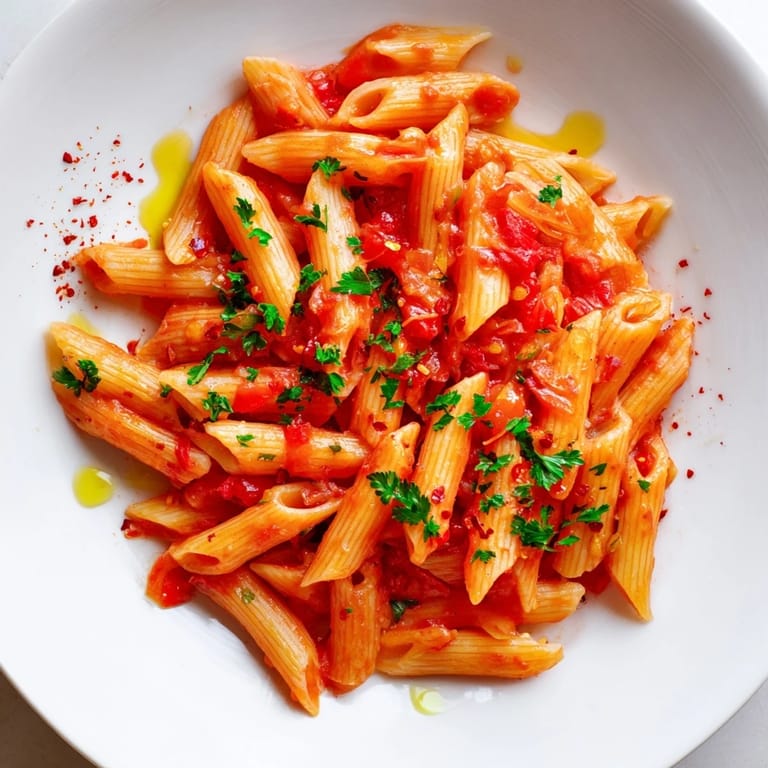
- Fresh flat-leaf parsley (2 tbsp, chopped): Don't skip this; it brightens everything and adds a fresh note right at the end.
Tired of Takeout? 🥡
Get 10 meals you can make faster than delivery arrives. Seriously.
One email. No spam. Unsubscribe anytime.
Instructions
- Get your water ready:
- Fill a large pot with salted water—it should taste like the sea—and bring it to a rolling boil. The salt here is your only seasoning for the pasta, so don't be shy.
- Cook the penne:
- Add pasta and stir right away so it doesn't stick together. Cook until al dente (a little firm when you bite it), then scoop out about half a cup of that starchy water before draining—this liquid gold will help you adjust the sauce later.
- Start your sauce base:
- In a large skillet over medium heat, warm the olive oil until it shimmers slightly. Add your sliced garlic and chili flakes together, stirring gently for about a minute until fragrant but still pale—you want the garlic to whisper, not shout.
- Build the sauce:
- Pour in your crushed tomatoes with their juice, add salt and pepper, and let it simmer uncovered for 12 to 15 minutes. Stir occasionally and watch as the sauce thickens and the flavors deepen into something rich and rounded.
- Bring it together:
- Add your drained penne to the sauce and toss everything together until every piece is coated. If it feels too thick, splash in some of that reserved pasta water a little at a time, stirring until the sauce flows smoothly around the pasta.
- Finish with intention:
- Remove from heat, stir in your fresh parsley, and drizzle a small amount of really good olive oil over the top. Taste it one more time—does it need a whisper more salt, or is the heat just right?
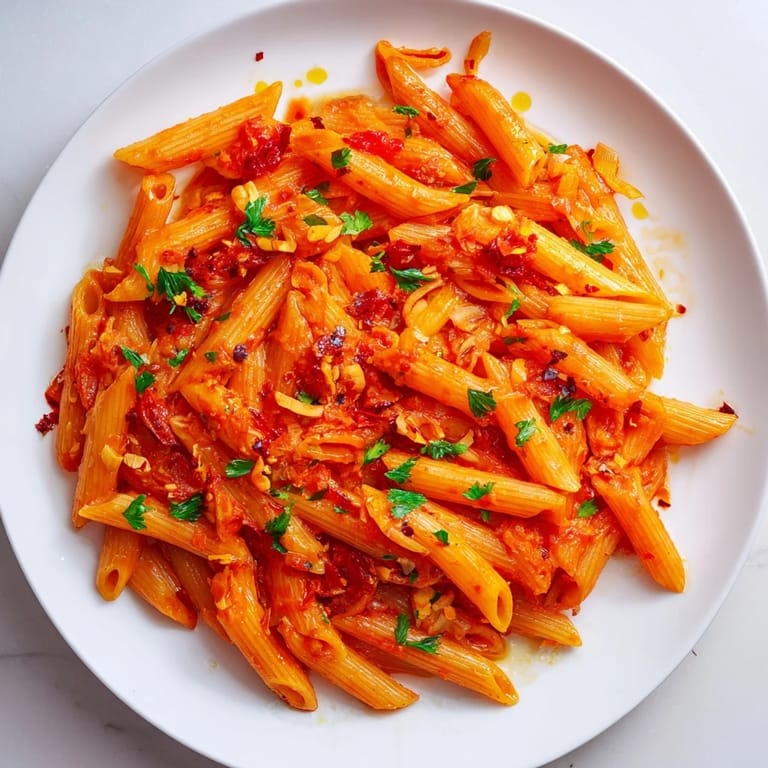 Pin this
 I remember eating this standing at the kitchen counter at midnight, and somehow it felt like the most luxurious meal I'd ever had. There was no fuss, no pretense—just pure, uncomplicated comfort that tasted like it had been waiting for me to discover it. That's when food stops being about recipes and starts being about moments.
The Soul of Simplicity
This dish is a masterclass in restraint. There are no hidden ingredients, no complicated techniques—just four or five core elements that know how to talk to each other. It taught me that sometimes the most elegant cooking happens when you stop trying to impress and start listening to what the food actually wants to become. Every element here has a purpose, and nothing is wasted.
Heat as a Character
The chili flakes aren't here to punish you; they're here to wake you up. I've learned that if you start with one teaspoon and taste early, you control the story instead of being controlled by it. The heat should build gradually on your tongue, lingering pleasantly rather than overwhelming, like a friend who starts quiet and becomes more interesting the longer they talk. This is why I always go slow with the spice and let it develop rather than dump it all in at once.
Serving and Savoring
Serve this immediately while the sauce is still alive and the pasta is at its prime. This isn't a dish that improves with time or benefits from being kept warm—it's best when it's just finished and still has that energy. Pair it with a glass of crisp white wine like Verdicchio, or something light and fruity like Chianti, and suddenly you're not just eating, you're celebrating.
- Don't add cheese unless you want to—the traditional version is naked and proud of it.
- Extra olive oil drizzled over the top at the table is never wrong and always welcome.
- Save any leftovers but eat them cold the next day like a little secret snack.
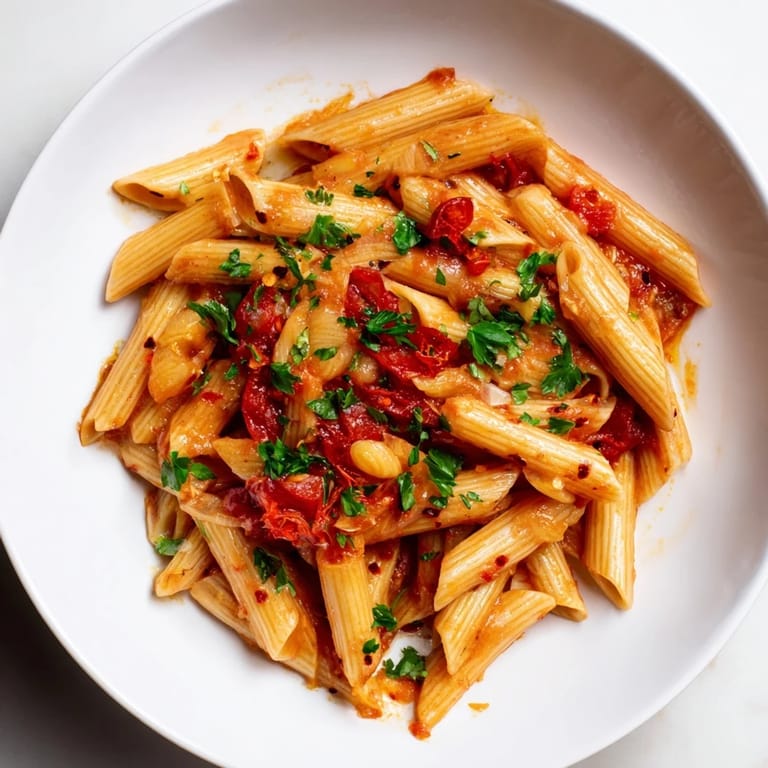 Pin this
 This recipe gave me permission to stop overthinking dinner and just cook what makes me happy. Sometimes the simplest dishes teach us the most.
Recipe FAQs
- → How can I adjust the heat level in this dish?
Modify the quantity of red chili flakes according to your preferred spice intensity, reducing or increasing them for milder or hotter flavors.
- → What type of pasta is best for this preparation?
Penne rigate is ideal as its ridged texture holds the sauce well, but other short tubular pastas may also be used.
- → Can I prepare the sauce ahead of time?
Yes, the tomato sauce can be made in advance and gently reheated before combining with pasta for convenience.
- → What is the key to achieving a rich sauce texture?
Simmering crushed tomatoes until slightly thickened and adding reserved pasta water helps create a balanced, cohesive sauce coating.
- → Are there any specific garnishes that complement this dish?
Fresh flat-leaf parsley adds brightness, and a final drizzle of extra virgin olive oil enriches the overall flavor.