 Pin this
 My sister called me on a Tuesday morning asking if I could bring dessert to Mom's brunch, and I immediately pictured a pavlova—that impossibly elegant meringue shell that somehow feels both delicate and substantial. Years ago, I'd watched my grandmother whip egg whites in her kitchen, muttering about humidity while the mixer hummed, and I'd been chasing that magic ever since. There's something almost meditative about building a pavlova: the way the whites transform from cloudy foam into glossy peaks, the gentle folding of secret ingredients that keep the center marshmallow-soft. I wanted to create something that tasted as good as it looked, something Mom would remember.
I'll never forget Mom's face when she saw it—she laughed and said it was too pretty to eat, then immediately went for a forkful anyway. We sat around the table that morning with the pavlova in the center, everyone picking at it slowly, making it last, and somehow the dessert turned into the whole reason we lingered over coffee. That's when I realized pavlova isn't really about impressing people; it's about giving them permission to slow down and savor something beautiful.
Ingredients
- Egg whites (4 large, room temperature): Room temperature whites whip faster and create more stable peaks—take them out of the fridge 30 minutes before you start, and make sure your bowl is completely grease-free or they won't cooperate.
- Superfine sugar (1 cup, 200 g): This dissolves faster than regular sugar, ensuring a glossy, smooth meringue; if you only have regular sugar, pulse it in a food processor for 30 seconds.
- Cornstarch (1 tsp): This tiny amount helps stabilize the meringue and keeps the inside marshmallow-soft while the outside stays crisp.
- White vinegar (1 tsp): A secret ingredient that prevents the meringue from weeping and gives it stability; use it confidently even though it seems odd.
- Pure vanilla extract (1 tsp): Adds warmth and complexity without overwhelming the delicate meringue flavor.
- Salt (pinch): Enhances the sweetness and helps egg whites reach their full potential faster.
- Heavy whipping cream (1 cup, 240 ml), chilled: Cold cream whips to soft peaks more reliably than warm cream; chill your mixing bowl too if your kitchen is warm.
- Powdered sugar (2 tbsp for cream, plus optional dusting): Dissolves instantly into cream without grittiness, unlike granulated sugar.
- Mixed berries (4 cups total): Use whatever looks freshest at your market; I prefer a mix for both color and flavor complexity, and I always inspect raspberries carefully since they bruise easily.
- Fresh mint (1 tbsp, optional): A tiny leaf on each slice elevates the presentation and adds a whisper of freshness that cuts through the sweetness.
Tired of Takeout? 🥡
Get 10 meals you can make faster than delivery arrives. Seriously.
One email. No spam. Unsubscribe anytime.
Instructions
- Set up your space:
- Preheat your oven to 250°F (120°C) and line a baking sheet with parchment paper, then use a pen to trace a 9-inch circle as your guide—this simple step prevents you from eyeballing it and ending up with a lopsided pavlova. Make sure your mixing bowl and beaters are completely dry; even a drop of water or a smudge of egg yolk will sabotage your meringue.
- Begin the meringue:
- Pour egg whites into your clean bowl, add a tiny pinch of salt, and start beating on medium speed until soft peaks form—you'll know it's ready when the mixture becomes foamy and fluffy, about 3 minutes. At this point, turn the mixer off and lift a beater; the peak should gently curl over like a wave.
- Add sugar gradually:
- This is where patience matters: sprinkle in the superfine sugar one tablespoon at a time while the mixer runs, waiting a few seconds between additions so each batch dissolves completely. After about 5-6 minutes of total beating, you'll have a thick, glossy meringue that stands in stiff peaks and feels silky when you rub it between your fingers.
- Fold in the secret ingredients:
- Remove the bowl from the mixer and gently fold in the cornstarch, vinegar, and vanilla using a rubber spatula with slow, deliberate strokes—you're maintaining all those air bubbles you just created. Work slowly and with purpose; this takes maybe a minute, and you're done when the mixture looks slightly marbled.
- Shape your nest:
- Spoon the meringue onto the parchment paper within your traced circle, then use the back of a spoon or spatula to create a slight depression in the center and raise the edges higher—this forms a natural nest that cradles the cream and berries. The meringue should look a bit rustic and organic, not perfectly smooth.
- Bake low and slow:
- Slide it into the oven for exactly 1 hour and 15 minutes at that low temperature; the pavlova will turn pale cream-colored and firm to the touch, but stay slightly soft inside. Turn off the oven, crack the door open just an inch or two, and let it cool completely inside for at least an hour—this gradual temperature change prevents cracking.
- Prepare the cream:
- While the pavlova cools, chill your mixing bowl and beaters, then pour in the cold heavy cream with powdered sugar and vanilla. Beat on medium speed for 2-3 minutes until soft peaks form—you want it cloud-like and spreadable, not stiff and separated.
- Assemble your masterpiece:
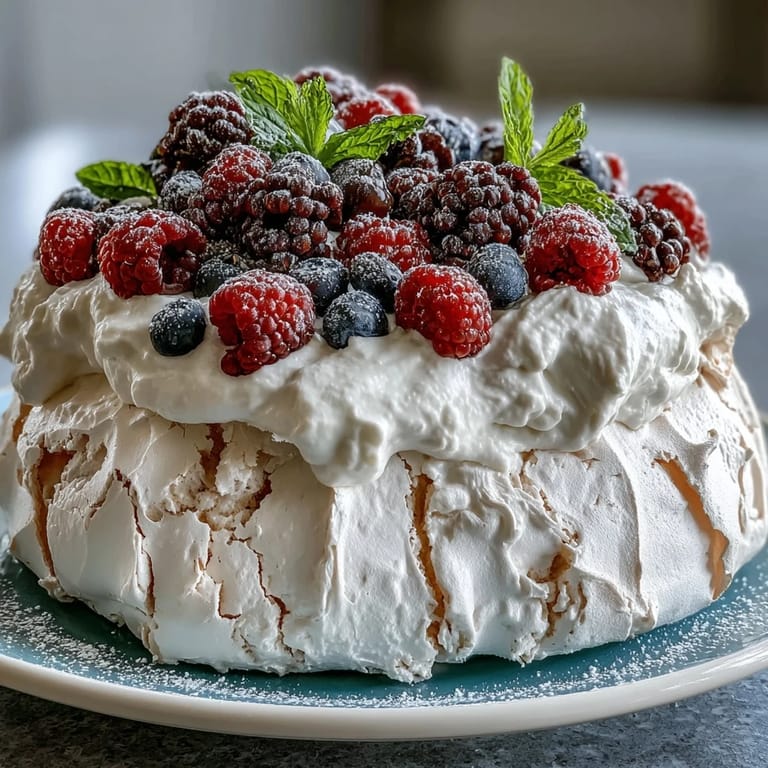
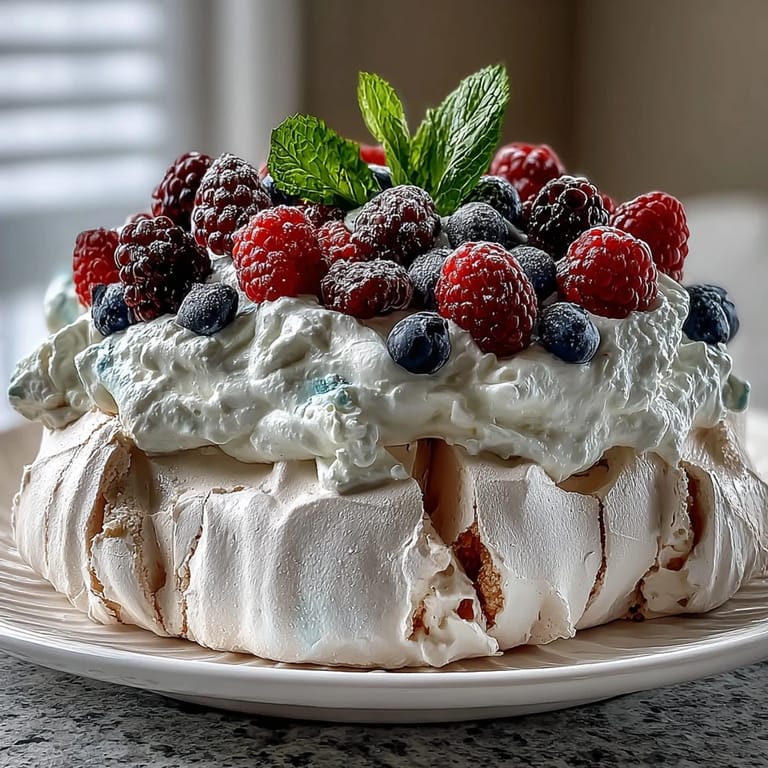
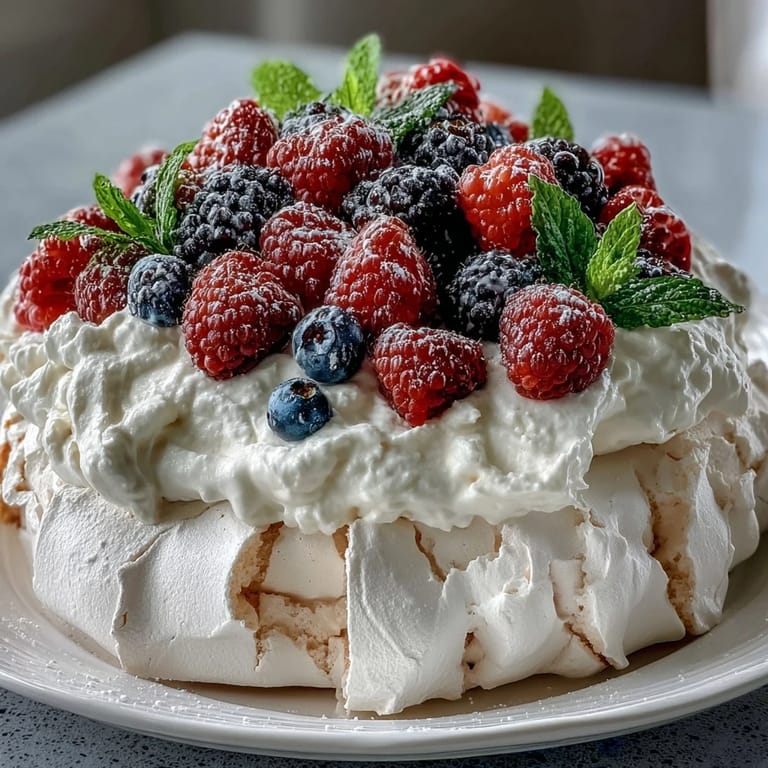
- Once the meringue has completely cooled, transfer it carefully to your serving platter (a wide spatula helps here), spread or dollop the whipped cream into the center, then arrange your berries artfully on top. Add a few mint leaves for color, and if you're using the optional powdered sugar dust, sift it over everything just before serving.
 Pin this
 There's a moment when you first pull the pavlova out of the oven and the kitchen fills with this subtle, toasted vanilla smell that makes everything feel celebratory. It's just eggs and sugar transformed by heat and time, but somehow it becomes something special—a small edible miracle that makes whoever is eating it feel cared for.
The Science of Why This Works
The meringue works because egg white proteins unfold and trap thousands of tiny air bubbles when you beat them, creating that foam structure that can hold sugar without collapsing. The cornstarch and vinegar are your insurance policy: cornstarch absorbs moisture that would otherwise make the meringue sticky, while vinegar stabilizes the protein structure and prevents weeping. Baking at a very low temperature essentially dehydrates the meringue rather than browning it, which is why you end up with that crispy outside and marshmallow-soft center.
Making It Ahead (And Other Practical Wisdom)
I always make the pavlova shell the morning of a celebration because it actually improves slightly as it cools and sits for a few hours in a dry environment. The whipped cream can be made an hour ahead and kept in the fridge, covered, but those berries are best arranged as close to serving time as possible—they start releasing their juices once they hit the cream, which is beautiful but will eventually soften your meringue if you wait too long. If you're bringing this to someone's house, transport the meringue base and cream separately, then assemble it when you arrive.
Variations and Flavor Adventures
Once you master the basic pavlova, the possibilities open up in every direction—you can fold cocoa powder or instant coffee into the meringue, top it with lemon curd and fresh raspberries for a sharp-sweet contrast, or use stone fruits like peaches and plums in summer. I've made it with passion fruit curd drizzled over the cream, with crushed honeycomb candy scattered on top for crunch, and even with a dark chocolate ganache layer. The meringue shell is your edible canvas, and the toppings are really just limited by what's fresh and what you're craving.
- Try folding 2 tablespoons of sifted cocoa powder into the meringue for a chocolate version that still maintains that signature texture.
- Raspberry and rose are a classic pairing—add a drop or two of rose water to the cream and use mostly raspberries as your berry choice.
- For a brunch situation, top with lemon curd and candied lemon zest instead of berries for a completely different but equally impressive effect.
 Pin this
 Pavlova has taught me that sometimes the most impressive things are built on the simplest foundations—just eggs, sugar, and time. Make this for someone you love, and watch their face light up.
Recipe FAQs
- → How do you achieve a crisp pavlova shell with a soft center?
Slowly baking the meringue at a low temperature and allowing it to cool inside the oven ensures a crunchy exterior while maintaining a marshmallow-like interior.
- → Can I substitute other fruits for the mixed berries?
Yes, seasonal fruits like kiwi, peaches, or passionfruit make excellent alternatives to create varied flavors and colors.
- → What is the role of vinegar and cornstarch in the meringue?
Vinegar stabilizes the egg whites and cornstarch helps create a tender, marshmallow-like center in the pavlova.
- → How should the whipped cream be prepared for topping?
Chill the cream and beat it with powdered sugar and vanilla extract until soft peaks form for a light and fluffy finish.
- → What tips help avoid humidity affecting pavlova texture?
Prepare pavlova on a dry day and store it in an airtight container to keep the crispness intact and prevent sogginess.