 Pin this
 I'll never forget the first time I saw a cornucopia arranged on my grandmother's harvest table—it was this magical moment where food became art, where abundance felt tangible enough to touch. That golden horn overflowing with jewel-toned dried fruits and creamy wedges of cheese seemed to celebrate not just Thanksgiving, but every good thing about autumn itself. Years later, when I recreated it for my own table, I realized it wasn't just beautiful to look at; it tasted like tradition, like generosity, like the season itself condensed into bites of sweetness and savory richness.
I remember assembling this for a small Thanksgiving gathering, nervously arranging and rearranging until my partner finally said, 'Stop fussing—it's already perfect.' Within minutes, everyone was gathered around it, plucking cheese and dried apricots, and the conversation just flowed. That's when I understood: this isn't just food, it's an invitation to linger and connect.
Ingredients
- Dried apricots (1 cup): These are your stars—bright, slightly tart, and they soften just enough to bite through. I learned to buy whole dried apricots rather than the pre-sliced ones; they hold their shape better and look more abundant in the arrangement.
- Dried figs (1 cup): They bring an almost mysterious sweetness and a beautiful deep color that contrasts beautifully with lighter cheeses. Look for ones that are pliable, not rock-hard.
- Dried cranberries (1 cup): Tiny flavor bombs of tartness that cut through the richness of cheese perfectly. They're the reason people keep coming back for just one more bite.
- Dried apple rings (1 cup): These add visual interest—those perfect little circles—and a nostalgic, gentle sweetness that feels very autumnal.
- Seedless grapes (1 cup, optional): Fresh grapes offer juiciness and a burst of moisture against all the dried fruits. I add them when I can because they make the arrangement feel alive.
- Walnuts (1 cup): Earthy and slightly bitter, they ground all the sweetness. Toast them lightly for about 5 minutes if you want them to taste even more like autumn.
- Pecans (1 cup): These are buttery and a bit more refined than walnuts. They soften the arrangement somehow, make it feel more generous.
- Almonds (1 cup): Mild and familiar, they're the bridge between the bolder flavors. I sometimes blanch mine for a prettier presentation, but raw works beautifully too.
- Aged cheddar, cut into cubes (6 oz): This is your sharp note, the one that makes your palate wake up. The age matters—go for something that's been aged at least a year if you can find it.
- Creamy goat cheese, sliced into rounds (6 oz): Tangy and luxurious, it's the unexpected pleasure, the ingredient that makes people pause and say, 'What is that?' Slice it just before serving so it doesn't dry out.
- Rustic blue cheese, crumbled (6 oz): This is for people with adventurous palates. A little goes a long way, and it creates this beautiful visual interest with its blue veining.
- Aged gouda or similar hard cheese, cubed (6 oz): Nutty and smooth, this is the crowd-pleaser, the cheese that everyone gravitates toward. It's the comfort in this arrangement.
- Rustic crackers (2 cups): Look for ones with texture and character—seeded, multigrain, or simple water crackers. They should feel substantial, not delicate.
- Baguette, sliced (1 small): Slice it on an angle so each piece feels intentional and prettier. Toast the slices lightly if you want them to last longer without getting soft.
- Fresh rosemary and thyme sprigs: These aren't just garnish; they perfume the whole arrangement and add a whisper of herbaceousness that makes people close their eyes and think of forests and autumn.
- Edible flowers or seasonal leaves (optional): Calendula petals, pansies, or nasturtiums add magic. If you can't find edible flowers, beautiful seasonal leaves work just as well.
- Wicker cornucopia basket or homemade edible bread horn: This is your stage. If you don't have a cornucopia, use a gorgeous wooden board or even pile everything on a large platter in a cornucopia-like shape.
Tired of Takeout? 🥡
Get 10 meals you can make faster than delivery arrives. Seriously.
One email. No spam. Unsubscribe anytime.
Instructions
- Set your stage:
- Place your cornucopia basket or bread horn right in the center of your largest, most beautiful serving platter or board. Step back and look at it. This is your foundation, your invitation to abundance. If it's a wicker basket, you might line it with parchment paper so bits don't fall through.
- Begin with the cheese:
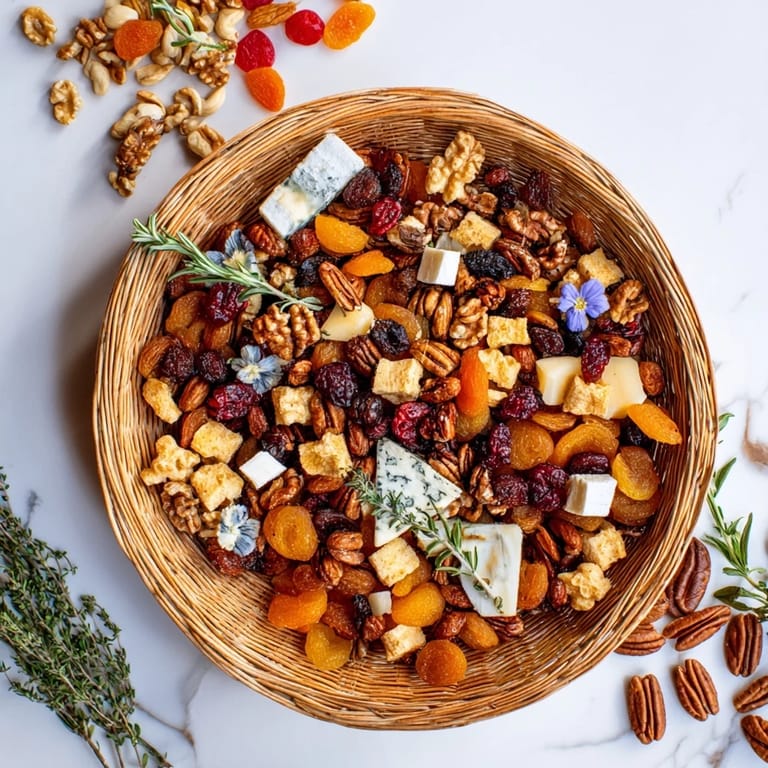
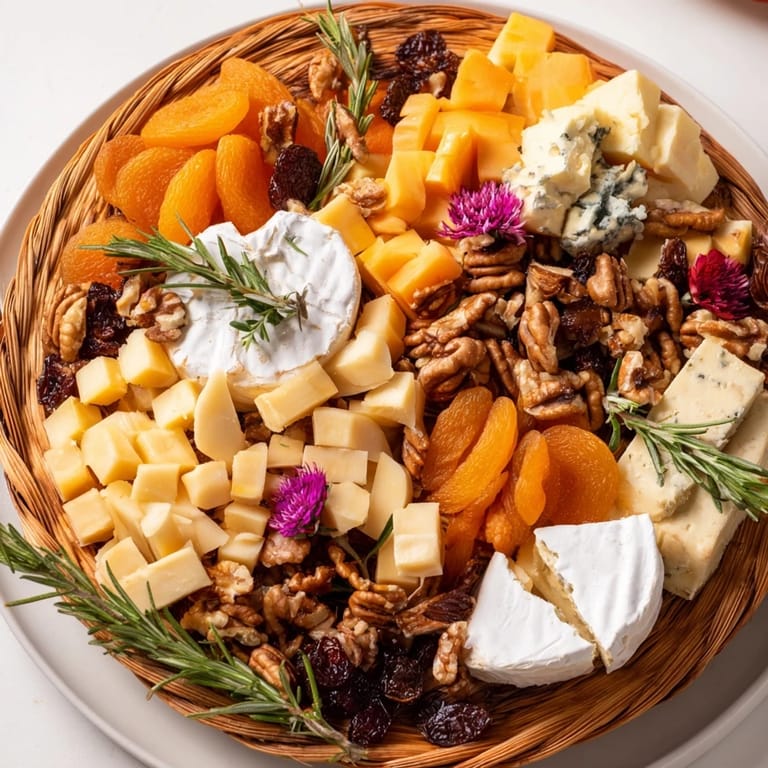
- Arrange the cheeses inside the opening and let some pieces tumble out, as if the horn itself is so full it can't possibly contain everything. Mix the colors—the golden cheddar, the white goat cheese, the blue-veined blue cheese, the pale gouda. This is where the arrangement starts to feel intentional.
- Layer in abundance:
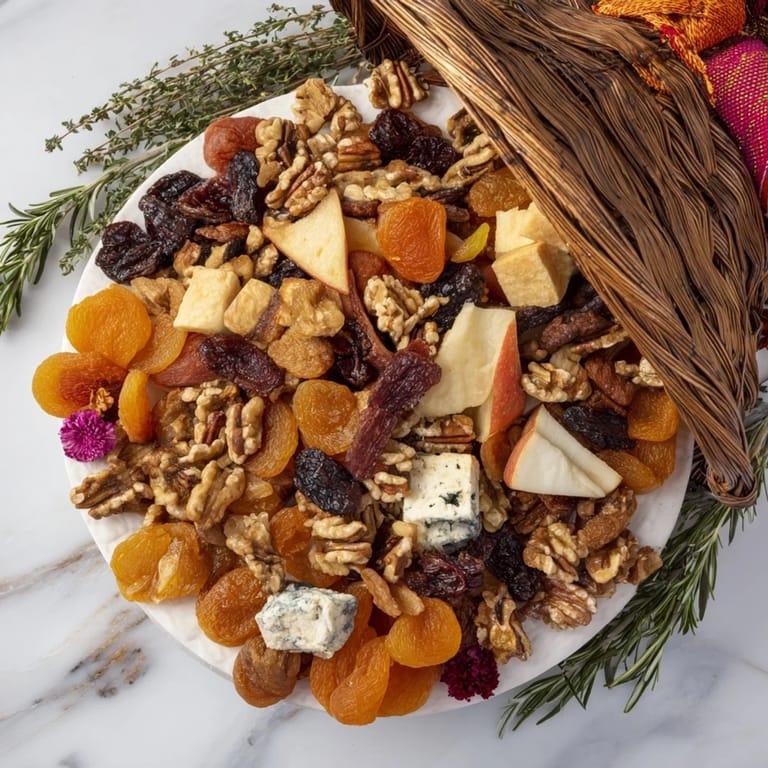
- Now comes the meditative part. Tuck dried fruits and nuts around the cheeses, letting them spill out and over the edges of the horn. Mix colors and textures as you go—don't let the deep figs sit only with the dark cranberries. Nestle some golden apricots next to the pale almonds. Let walnuts tumble near figs. You're creating visual rhythm.
- Tuck in the crackers and bread:
- Lean crackers and bread slices against the fruits and nuts, creating little pockets and angles. Some should stand upright, some should lay casually. This is where you create little pathways for people's eyes and hands to follow.
- Garnish with intention:
- Scatter fresh rosemary and thyme sprigs throughout. Tuck edible flowers into gaps. This final step is what transforms an impressive arrangement into something that feels alive and seasonal. Step back frequently to look at the whole picture.
- Serve and watch the magic:
- Set this out at room temperature about 30 minutes before guests arrive. This is not meant to be served with small plates and forks. This is meant to be approached, admired, and then picked through with fingers and the occasional small tongs. The joy is in the choosing.
 Pin this
 There was a moment last Thanksgiving when my niece, who's usually glued to her phone, set it down completely and spent ten minutes just studying the cornucopia before choosing what to eat. She said it looked 'too pretty to eat,' and then she did anyway, and we all laughed. That's what I love about this recipe—it reminds people that food is ceremony, that how we present what we serve matters.
Building Your Cheese Selection
The beauty of this arrangement is how the four cheeses create a flavor journey. The sharp aged cheddar wakes up your palate, the creamy goat cheese softens it again, the blue cheese surprises you, and the gouda comforts you. If one of these doesn't appeal to you or your guests, swap it out—but try to maintain that balance of sharp, creamy, bold, and approachable. I once substituted a smoked gouda for the regular, and it added a whole unexpected dimension to the arrangement. The cheeses should feel like different chapters in a good book, each one distinct but part of the same story.
Dried Fruits: Your Palette of Autumnal Colors
What makes this centerpiece work visually is the interplay of colors—the sunset oranges of apricots, the deep burgundy of cranberries, the near-black of figs, the golden translucence of apple rings. As you arrange, think like a painter. You're not just placing fruits randomly; you're creating color balance across the cornucopia. The brightest colors should be distributed throughout so no single area feels heavy or dull. I once arranged it all in color blocks, and it looked sorted rather than abundant. The magic happens when you mix.
Making It Your Own
This is where the recipe becomes less about following rules and more about intuition. Don't have blue cheese in the house? Use a sharp white cheddar instead. Can't find dried figs? Add dried pears or dried cherries. The cornucopia is fundamentally a recipe about what you love and what you have. I've made versions with pistachios, with dried mango, with candied ginger tucked in for surprise. The structure stays the same—abundance, color, contrast—but the specifics become completely yours. That's when it stops being a recipe and becomes a tradition.
- If you're making an edible bread horn, bake it the day before so you can focus on arranging the day of
- Set out small plates and napkins nearby—people will appreciate having somewhere to gather their bites
- Pair this with honey, fig jam, or apple butter on the side for guests who want something extra
 Pin this
 This recipe is really just an excuse to gather beautiful things and present them with care. When you make this, you're not just serving food—you're creating a moment where people slow down and really taste things, really see each other. That's worth the 25 minutes of arranging.
Recipe FAQs
- → How do I create the bread horn base?
Shape bread dough around a foil-covered cone, bake until golden brown, then cool before filling with fruits, nuts, and cheeses.
- → Can I substitute any nuts or cheeses?
Yes, feel free to swap nuts or cheeses to suit taste preferences or dietary restrictions, maintaining the variety of textures and flavors.
- → What is the best way to arrange the ingredients?
Layer cheeses inside the horn opening first, then add dried fruits and nuts around and spilling outward, followed by crackers and bread slices.
- → How should I serve this centerpiece?
Serve at room temperature to highlight the mix of flavors and allow guests to pick their preferred bites easily.
- → Are there any allergy considerations?
This dish contains dairy and tree nuts; use gluten-free crackers or bread to accommodate gluten sensitivities.