 Pin this
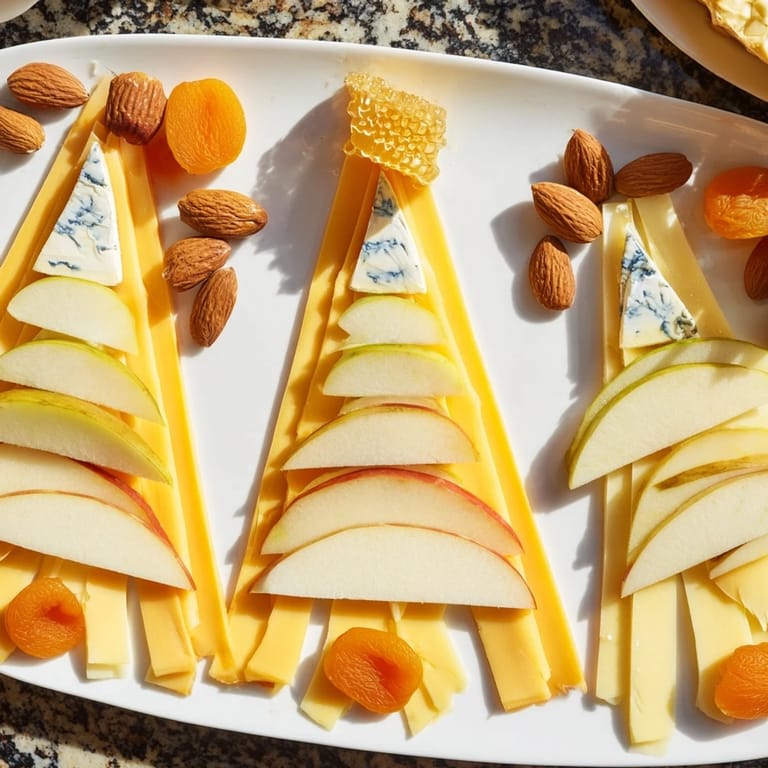
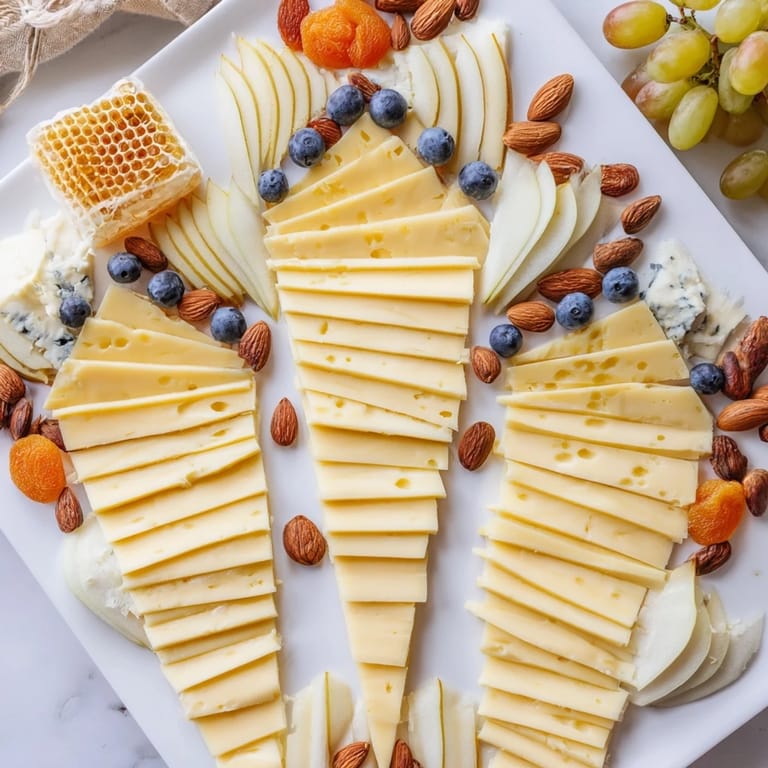
 I stumbled onto the inspiration for this platter during an exhibition on 1920s design—those Art Deco arches with their geometric precision captivated me. Walking through the gallery, I couldn't stop imagining how those same bold, symmetrical lines would look translated onto a cheese board. That evening, I raided my cheese drawer, grabbed a few slices, and began experimenting with fans and overlaps, suddenly realizing I was building edible architecture. The moment friends saw it, their eyes lit up before they even tasted anything. It felt less like serving cheese and more like unveiling something memorable.
My sister brought this platter to her dinner party, and I watched grown adults pause mid-conversation just to photograph it. Someone joked that it looked too beautiful to eat, but then they couldn't resist a slice of brie. That's when I knew this arrangement had crossed from simple appetizer into conversation starter—the kind of dish people remember not just for taste, but for how it made them feel in that moment.
Ingredients
- Aged cheddar: Slice this one thin so the fans stay delicate; the sharpness cuts through rich brie beautifully.
- Gruyère: Nutty and complex, it adds depth that prevents the board from feeling one-note.
- Manchego: This Spanish cheese gives a subtle earthiness and holds its shape when fanned.
- Creamy brie: Wedges anchor each arch and give you a soft, luxurious moment between bites.
- Blue cheese: Cut into tiny triangles so they sit like architectural peaks—a bold punctuation mark.
- Grapes, pears, and apples: These aren't just color; they refresh your palate and balance the richness.
- Roasted almonds and dried apricots: Scatter these to create textural contrast and subtle sweetness.
- Honeycomb or honey: A drizzle near the brie catches light and adds warmth to the whole composition.
- Baguette and crackers: Your vehicle for everything—choose a mix so there's always something to hold each cheese.
Tired of Takeout? 🥡
Get 10 meals you can make faster than delivery arrives. Seriously.
One email. No spam. Unsubscribe anytime.
Instructions
- Start with your base:
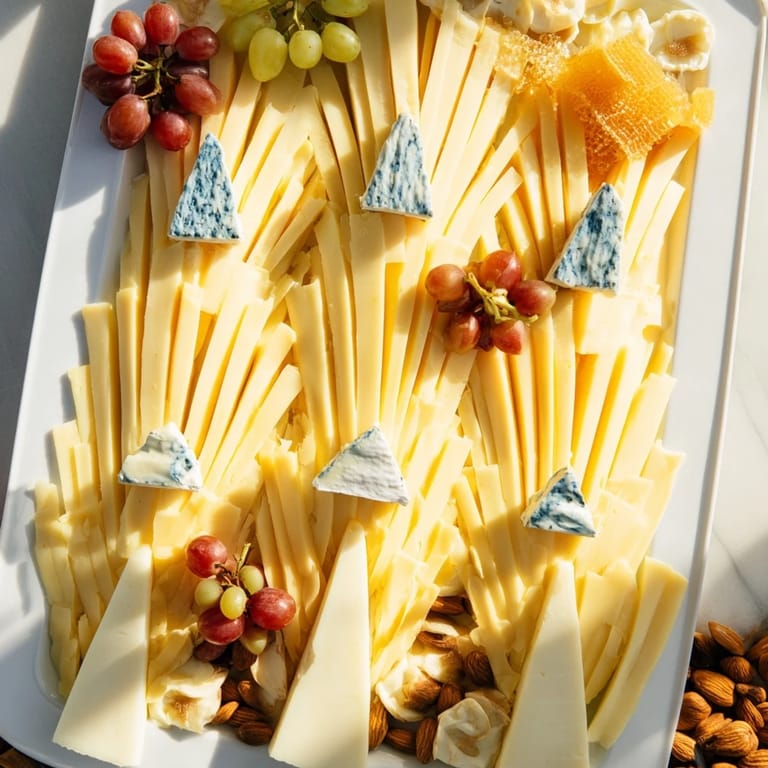
- Place your large platter in front of you and imagine three invisible arches or fan shapes spaced across it. This mental map will keep your arrangement balanced and intentional as you build.
- Create the first cheese fan:
- Take your thin cheddar slices and overlap them in a graceful arc, like a peacock tail opening. Each slice should sit at a slight angle, revealing just enough of the slice beneath to create depth and movement.
- Repeat with Gruyère and Manchego:
- Build two more fans using the same overlapping technique, spacing them so the platter feels symmetrical. Step back occasionally—your eye will tell you if something needs adjusting before you commit to the next element.
- Add the brie wedges:
- Position these at the base of each arch like solid architectural foundations, creating visual weight and stability to contrast the delicate fan shapes above.
- Crown with blue cheese:
- Place a few blue cheese triangles at the peak of each arch to mimic those iconic Art Deco skyscraper points. They don't need to be perfectly aligned; a slight asymmetry actually feels more dynamic.
- Fill the spaces with color:
- Cluster your grapes, pear slices, and apple slices in the negative space between arches. Let them nestle naturally rather than forcing them into rigid rows.
- Scatter nuts and dried fruit:
- Sprinkle almonds and apricots across the platter where they'll catch light and add visual interest. Imagine you're placing them by instinct rather than calculation.
- Finish with honey:
- Drizzle honeycomb or a thin line of honey near the brie—this adds a glossy highlight and signals sweetness without overwhelming. Arrange your bread and crackers along the edges, creating an accessible frame that invites people to dig in.
 Pin this
 There's something almost meditative about arranging these slices, watching a flat board transform into a miniature skyline. When you step back and see the arches reflected in the eyes of someone tasting it for the first time, you realize you've created something that nourishes more than just hunger.
The Geometry of Flavor
Each cheese on this board plays a distinct role—cheddar's sharpness cuts through richness, Gruyère adds nutty warmth, and Manchego brings an almost honeyed earthiness. The blue cheese triangles provide a sophisticated boldness that anchors the whole composition. When you taste them as an arc rather than individual slices, flavors build and echo in a way that feels almost intentional, almost architectural.
Pairing and Presentation
This platter deserves a beverage that matches its elegance—a crisp Champagne makes sense, but a dry Riesling adds a hint of sweetness that plays beautifully against aged cheddar. The moment you set this on the table, lighting matters; try positioning it where soft light can catch the glossy honey and the translucent apple slices. Watch how people approach it; they rarely dig in immediately because they sense they're looking at something composed, something that took intention to build.
Making It Your Own
Feel free to swap any cheese for something that speaks to you—Comté brings deeper caramel notes, aged Gouda adds smokiness, Emmental creates milder, creamier fans. Some people add figs or candied pecans instead of apricots; others prefer walnuts for their earthy bitterness. The structure remains the same; only the flavors shift, turning this into your personal expression of Art Deco elegance.
- If blue cheese isn't your thing, use more aged cheddar or add a sharp aged Gouda at the peaks instead.
- For a gluten-free spread, swap the baguette and standard crackers for gluten-free alternatives without changing the overall composition.
- Make this the day before by prepping all your cheese slices and keeping them between parchment paper in the fridge, then assemble fresh an hour before guests arrive.
 Pin this
 This platter taught me that presentation and taste aren't separate things—when food looks like it was created with intention, people taste the care before they ever take a bite. That's the real art.
Recipe FAQs
- → How do I create the symmetrical cheese arches?
Slice the cheddar, Gruyère, and Manchego thinly and overlap them slightly in tiered fan shapes to form three distinct arches on your platter.
- → What cheeses work best for this arrangement?
Aged cheddar, Gruyère, Manchego, brie, and blue cheese provide a balance of flavors and textures that complement the Art Deco design.
- → Can I substitute any ingredients?
Feel free to swap cheeses like Comté or Emmental, or use plant-based alternatives for a vegan-friendly option, omitting honey if desired.
- → What fruits pair well with this cheese platter?
Seedless green and red grapes, thinly sliced pears, and apples add freshness and color, enhancing the overall presentation and taste.
- → How should I serve the platter?
Arrange baguette slices and crackers along the sides for easy access, serve immediately, or chill covered for up to an hour before serving.
- → Any tips for slicing the cheeses evenly?
Using a wire cheese slicer helps achieve clean, even slices that create sharp fan shapes for the arches.