 Pin this
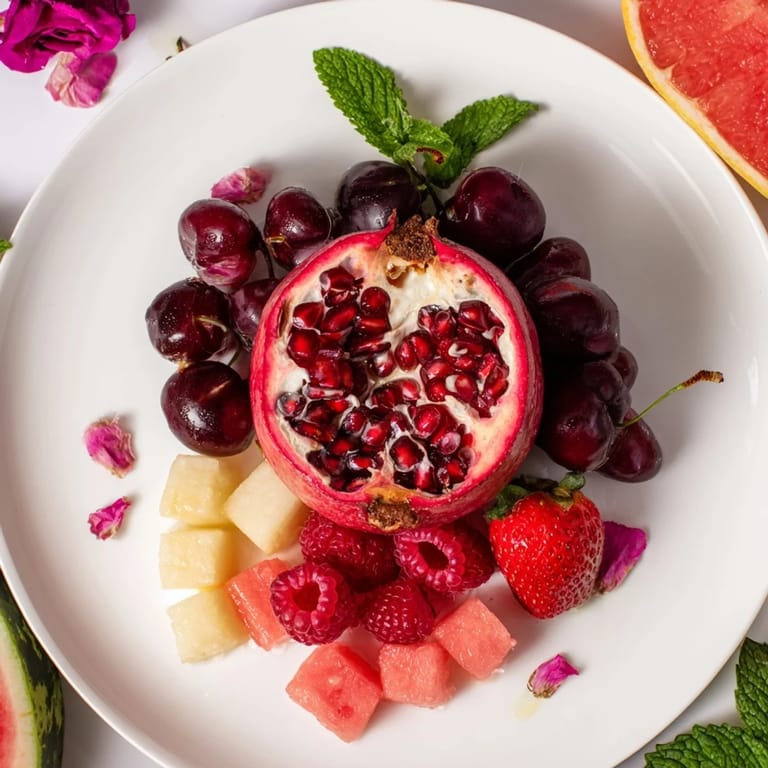
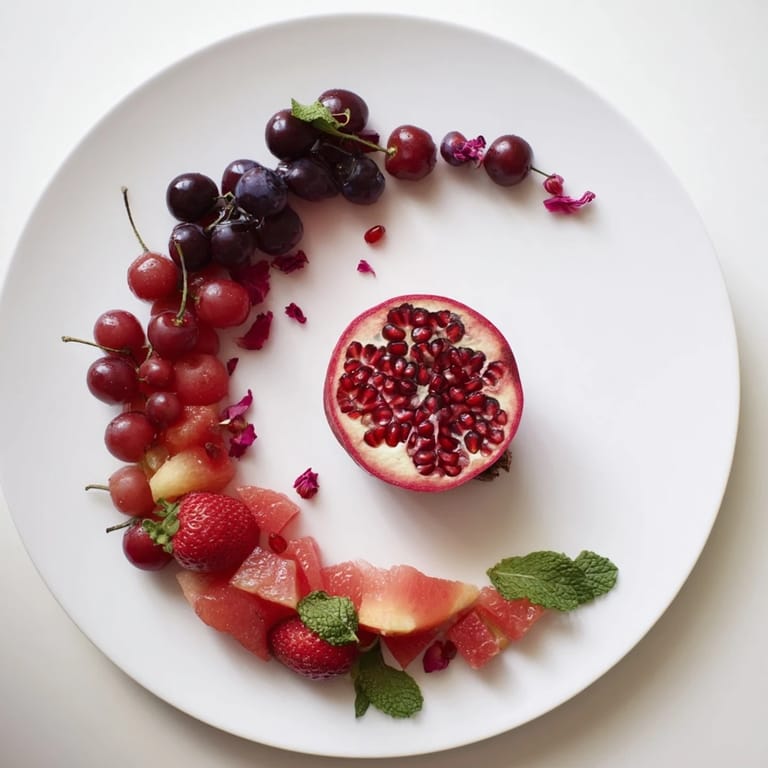
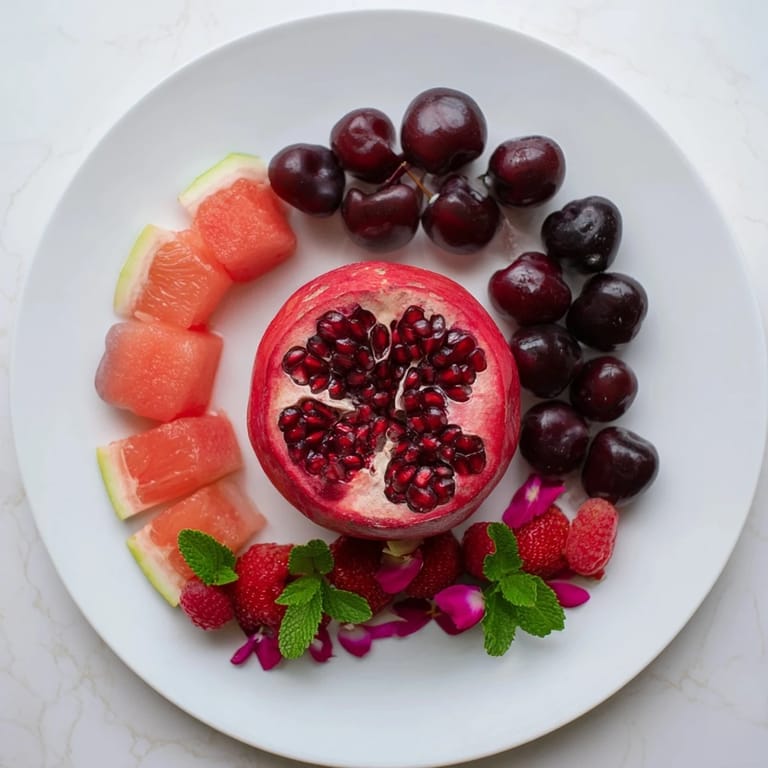
 I discovered the magic of a color gradient on a platter completely by accident. My sister was arriving for brunch, and I'd bought far too many fruits at the farmer's market—a pomegranate, cherries, raspberries, dragon fruit, pears—all in slightly different shades of red and pink. Instead of serving them in bowls like usual, I cut that pomegranate in half and set it in the center of our big platter, then started arranging everything by color, darkest to lightest, radiating outward. When she walked in, she gasped. It wasn't fancy or complicated, but it felt intentional, almost artistic. That moment taught me that sometimes the simplest arrangements create the most memorable presentations.
Last summer, I made this for a potluck where I knew absolutely no one. I was nervous, honestly, but the second I set this platter down, three different people asked how I made it look so beautiful. Turns out everyone wanted the recipe, and making something pretty gave me an excuse to actually talk to people. Food does that sometimes—it opens doors that small talk never could.
Ingredients
- 1 large pomegranate, halved: This is your anchor, your centerpiece. Choose a pomegranate that feels heavy for its size—it means it's juicy and packed with seeds.
- 1 cup dark cherries, pitted: These should be the darkest fruit on your platter, almost wine-colored. If cherries aren't in season, dark plums work beautifully.
- 1 cup red grapes: I prefer seedless because there's nothing worse than tiny pits rolling between your teeth, but use whatever you have.
- 1 cup strawberries, hulled: Fresh and firm are key—soft ones will weep into your other fruits and muddy the colors.
- 1 cup raspberries: Handle these last and gently. They bruise if you so much as look at them sideways, but their fragility is part of their charm.
- 1 cup watermelon, cubed: Cut these the day you're serving, or they'll dry out slightly. Room temperature watermelon on a hot day is pure comfort.
- 1 cup pink grapefruit segments: These add a sophisticated tartness that keeps the platter from feeling too sweet.
- 1 cup dragon fruit, cubed: The pale pink interior looks almost ethereal on the plate. If you can't find it, white nectarines or even white peaches substitute well.
- 1 cup apple slices (pink or blush varieties): Slice these close to serving time, and consider a light toss with a tiny bit of lime juice to prevent browning.
- 1 cup pear slices: The sweetest, most delicate flavors belong at the outer edge. Select pears that yield slightly to gentle pressure.
- Fresh mint leaves and edible rose petals (optional): These garnishes are optional, but they add an extra sensory dimension—the aroma of mint, the visual surprise of rose petals.
Tired of Takeout? 🥡
Get 10 meals you can make faster than delivery arrives. Seriously.
One email. No spam. Unsubscribe anytime.
Instructions
- Set your pomegranate crown:
- Place the halved pomegranate cut side up in the center of your platter. This is your focal point, so choose a platter large enough that fruits can radiate outward without crowding.
- Establish the deep red foundation:
- Arrange your darkest fruits—pitted cherries, red grapes, and hulled strawberries—in a crescent or ring around the pomegranate. Let them overlap slightly so the platter feels abundant, not sparse.
- Create the pink gradient:
- Layer raspberries, watermelon cubes, and grapefruit segments next to the red fruits, transitioning outward. This is where the platter starts to feel like a painting.
- Finish with pale hues:
- Arrange dragon fruit, apple slices, and pear slices at the platter's outer edge. The gradual shift from deep red to nearly white should feel smooth and intentional.
- Add final touches:
- Scatter mint leaves and edible rose petals across the platter if you're using them. Serve immediately or cover and refrigerate until your guests arrive.
 Pin this
 The best part isn't really the eating, though it's delicious. It's the moment right before, when someone leans over the platter and just looks at it for a moment, taking it in. I've watched people slow down because of something this simple and beautiful. That pause—that's what I'm really serving.
The Art of Color Transition
Color theory on a fruit platter is less intimidating than it sounds. You're essentially creating a spectrum, and nature has already done the heavy lifting by growing fruits in these perfect shades. The trick is overlap. Don't line fruits up in neat rings—let them tumble slightly over each other so your eye follows the gradient naturally. Uneven is actually more beautiful than perfect here.
Seasonal Substitutions That Work
Summer wants peaches and nectarines. Fall asks for figs and pomegranate seeds you can scatter in place of whole fruits. Winter doesn't have to mean giving up this platter—persimmons, blood oranges, and pomelos all work beautifully and remind you that color exists even when it's cold outside. Spring brings lychees and fresh berries that seem almost too delicate to eat. The platter adapts to what's alive in your region at any given moment.
Why This Works as Appetizer or Centerpiece
There's no rules about when fruit platters belong on a table. I've served this before a meal, as part of a spread, as the whole meal itself on a hot day, and even as a dessert alternative. It's light enough that it won't spoil anyone's appetite but substantial enough that it feels intentional, not like an afterthought. The beauty of it is that it quiets the conversation just a little, makes people present.
- Serve it chilled for maximum refreshment, especially on warm days.
- A bottle of sparkling rosé or champagne beside it feels celebratory without being overdone.
- Cut the pomegranate halves into quarters before serving if you want guests to easily access the seeds without making a mess.
 Pin this
 This platter is proof that you don't need to cook to create something that feels special. Sometimes the best meals are just about showing up with something honest and beautiful.
Recipe FAQs
- → How do I create the color gradient with the fruits?
Start with deep red fruits like cherries and strawberries near the pomegranate. Next, layer pink fruits such as raspberries and watermelon, then finish with pale pink and white fruits like dragon fruit and pear slices for a smooth color transition.
- → What fruits can I substitute seasonally?
You can swap in red currants, pomegranate seeds, lychees, or peaches depending on availability to maintain a similar color palette and flavor balance.
- → How do I prevent browning on apple and pear slices?
Lightly drizzle lime juice over apple and pear slices to keep them fresh and prevent discoloration during serving.
- → Can I prepare this platter ahead of time?
Arrange the fruits just before serving for best freshness, but you may cover and refrigerate the platter for a short time if necessary.
- → What garnishes complement the fruit platter?
Fresh mint leaves and edible rose petals add color contrast and a pleasant aroma without overpowering the natural fruit flavors.
- → Is this platter suitable for specific diets?
Yes, it is vegan and gluten-free, making it a versatile choice for various dietary needs.