 Pin this
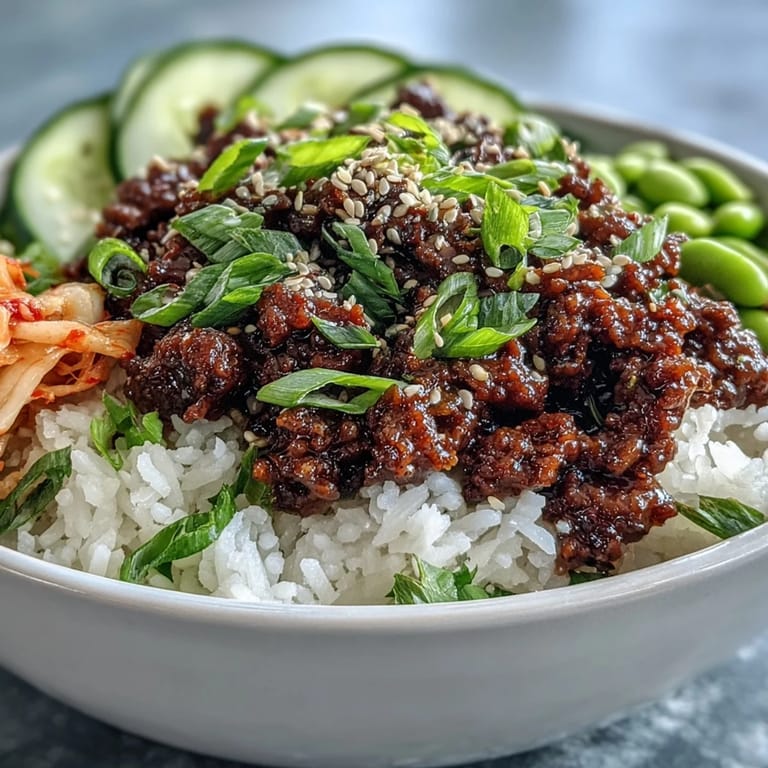
 My coworker brought a Korean beef bowl to lunch one Tuesday, and the whole office smelled like toasted sesame and gochujang for the rest of the afternoon. I kept stealing glances at her lunch container, watching how she'd layer the rice with vegetables and that glossy, caramelized beef. Three days later, I was in my own kitchen at 6 PM, determined to recreate it before dinner guests arrived. What started as an experiment turned into the dish I now make on nights when I want something that feels both comforting and exciting.
I made this for my sister's birthday dinner last spring, and she asked for the recipe before dessert even arrived. What I didn't expect was how the gochujang aroma would linger in my kitchen for hours afterward, that deep fermented warmth mixing with sesame smoke. She's since made it at least a dozen times, adding her own twist with extra kimchi. That's when I knew this recipe had staying power, the kind that doesn't fade after one good meal.
Ingredients
- Lean ground beef: 1 lb gives you substance and richness without being heavy, and breaking it into small pieces while cooking ensures every grain gets coated in sauce.
- Gochujang: 2 tbsp of this Korean chili paste is the soul of the dish, bringing complexity and depth that regular hot sauce can't match.
- Soy sauce: 2 tbsp adds saltiness and umami, balancing the sweetness and heat in a way that makes you want another bite.
- Brown sugar: 1 tbsp softens the intensity of gochujang and helps the sauce caramelize slightly as it cooks.
- Garlic and ginger: 2 cloves and 1 tbsp minced creates the aromatic foundation that makes your kitchen smell like a Korean restaurant.
- Toasted sesame oil: 1 tbsp is enough to add that distinctive nutty flavor without overwhelming the dish.
- Green onions: 2 sliced adds brightness at the end, a final note of freshness that cuts through the richness.
- Short-grain rice: 4 cups cooked serves as the canvas for everything else, better than long-grain because it holds sauce in its curves.
- Edamame: 1 cup shelled adds protein and a pop of color that makes the bowl visually alive.
- Cucumber and carrot: 1 cup each provides crunch and freshness that contrasts beautifully with the warm, soft beef.
- Kimchi: 1 cup chopped brings tangy funk that elevates the whole bowl from good to memorable.
- Toasted sesame seeds: 2 tbsp scattered on top adds nuttiness and texture that shouldn't be skipped.
Tired of Takeout? 🥡
Get 10 meals you can make faster than delivery arrives. Seriously.
One email. No spam. Unsubscribe anytime.
Instructions
- Start with aromatics:
- Heat sesame oil in a large skillet over medium heat, then add minced garlic and ginger. Let them sizzle for about a minute until the fragrance hits you and the edges start to turn golden. You'll know it's ready when your whole kitchen smells like it.
- Brown the beef:
- Add your ground beef to the pan and use a wooden spoon or spatula to break it into small pieces as it cooks, about 5 to 6 minutes total. Keep stirring occasionally so it browns evenly rather than clumping together, and don't rush this step because good browning creates better flavor.
- Build the sauce:
- Stir in gochujang, soy sauce, and brown sugar, cooking for another 2 to 3 minutes while the sauce thickens and coats each piece of beef in a glossy, caramelized layer. You'll see the color deepen and the consistency change from thin to luscious.
- Finish and finish:
- Remove from heat and stir in half the green onions, then taste and adjust seasoning if needed. This is your moment to decide if you want more heat, more salt, or more sweetness.
- Assemble with intention:
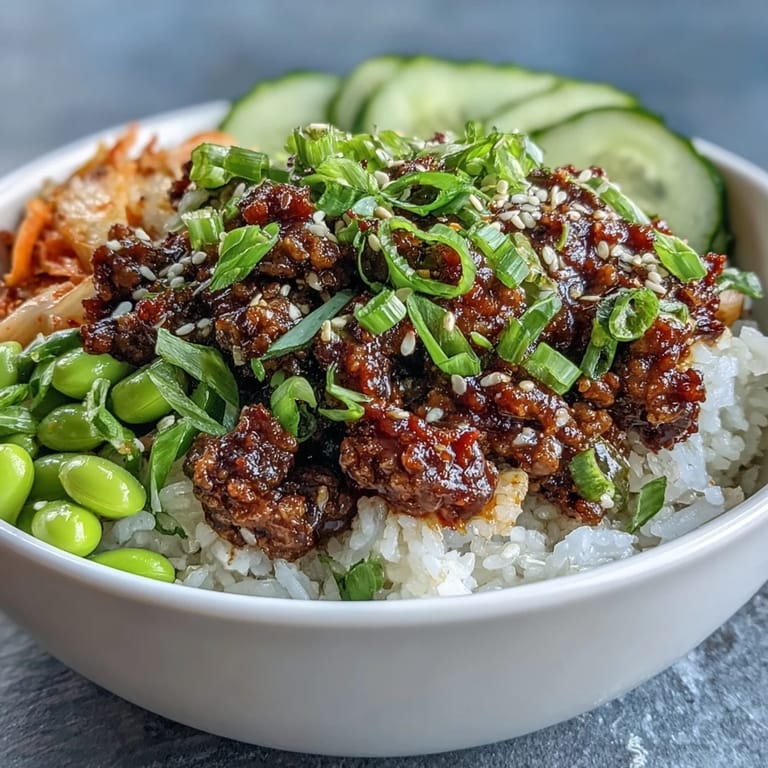
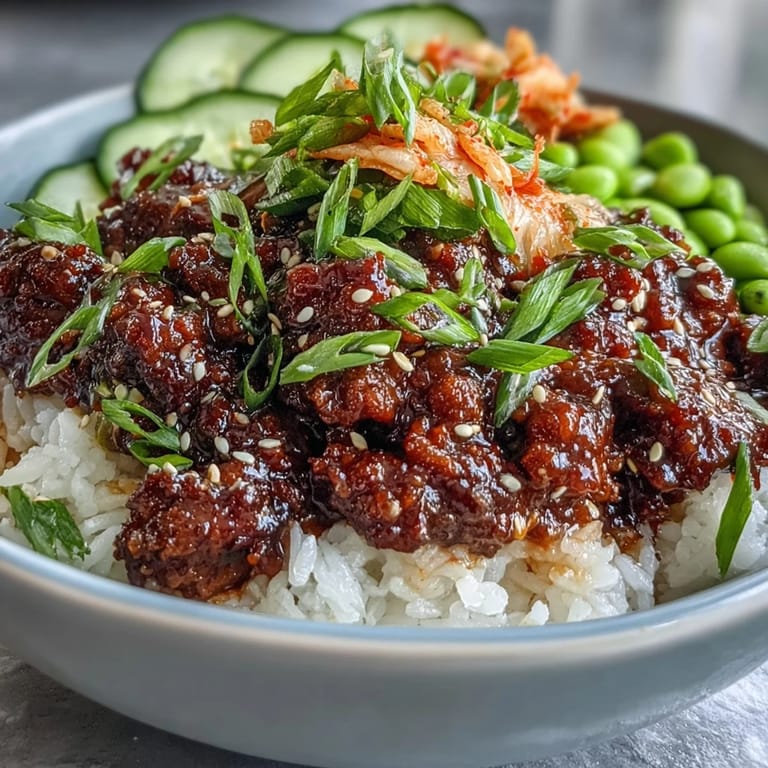
- Divide your cooked rice among four bowls, then top each one with the gochujang beef, edamame, cucumber, carrot, and kimchi in whatever arrangement makes you happy. There's no wrong way to build the bowl.
- Finish and serve:
- Sprinkle the remaining green onions and toasted sesame seeds over each bowl, then serve right away while everything is still warm and the rice is steaming. This is the moment it all comes together.
 Pin this
 My neighbor came over one evening hungry and skeptical, convinced that ground beef in a bowl couldn't possibly be that exciting. Watching her try it for the first time, seeing her pause mid-bite like she'd just discovered something, made me smile in a way that cooking for myself never quite does. That moment reminded me why I love this recipe: it's humble enough to seem simple, but complex enough to surprise people.
Why Gochujang Changes Everything
Most people think of Korean food as something that requires hours of fermentation or complicated techniques, but gochujang bridges that gap for home cooks. This fermented chili paste carries months of flavor development in a single spoonful, which means you don't need to build complexity through time. The moment it hits the hot beef pan, it blooms into something deeper than any fresh chili could achieve, transforming ordinary ground meat into something that tastes like it came from a proper Korean kitchen.
The Bowl Philosophy
There's something freeing about bowls compared to plated dishes, a sense that everything is casual and customizable rather than fixed and formal. People relax more when they're encouraged to mix their own ratios, combine flavors intentionally rather than accepting what's already decided for them. This particular bowl works because you can make it spicy, mild, crunchy, or soft depending on what you choose to prioritize in each bite.
Flexibility That Doesn't Feel Like Cheating
Ground turkey or chicken would lighten this substantially if that's what your kitchen or mood calls for, requiring only a tiny adjustment to cooking time since poultry cooks faster than beef. I've also made it vegetarian with crumbled tofu or lentils, and while it's different, it's genuinely good in its own way rather than feeling like a compromise. The magic isn't solely in the beef; it's in the sauce, the rice, and the fresh components working together.
- A fried egg on top adds richness and a runny yolk that acts like a secondary sauce.
- Extra gochujang on the side lets people who love heat add more without affecting the whole bowl.
- This keeps well in the refrigerator for lunch prep, though the vegetables taste crispest eaten the same day.
 Pin this
 This bowl has become my answer to the question of what to cook when I want something that feels nourishing without being fussy, exciting without being complicated. Every time I make it, I'm grateful for that coworker's lunch container and the curiosity it sparked.
Recipe FAQs
- → Can I make this dish less spicy?
Yes, reduce the amount of gochujang to 1 tablespoon or substitute with a milder Korean paste like doenjang. You can also add more brown sugar to balance the heat.
- → What can I substitute for ground beef?
Ground turkey, chicken, or plant-based crumbles work well as lighter alternatives. Cook times remain the same, though you may need to add a splash of oil if using lean meat.
- → Is this meal prep friendly?
Absolutely. Store cooked beef and rice separately in airtight containers for up to 4 days. Reheat beef in a skillet and add fresh vegetables and kimchi when serving.
- → Can I use cauliflower rice instead?
Yes, cauliflower rice makes a great low-carb alternative. Cook the cauliflower rice separately and keep in mind it will be more moist than regular rice.
- → How do I store leftovers?
Keep components separate in the refrigerator. Beef lasts 4 days, kimchi up to 2 weeks, and cut vegetables 3-4 days. For best results, reheat beef in a skillet to restore texture.