 Pin this
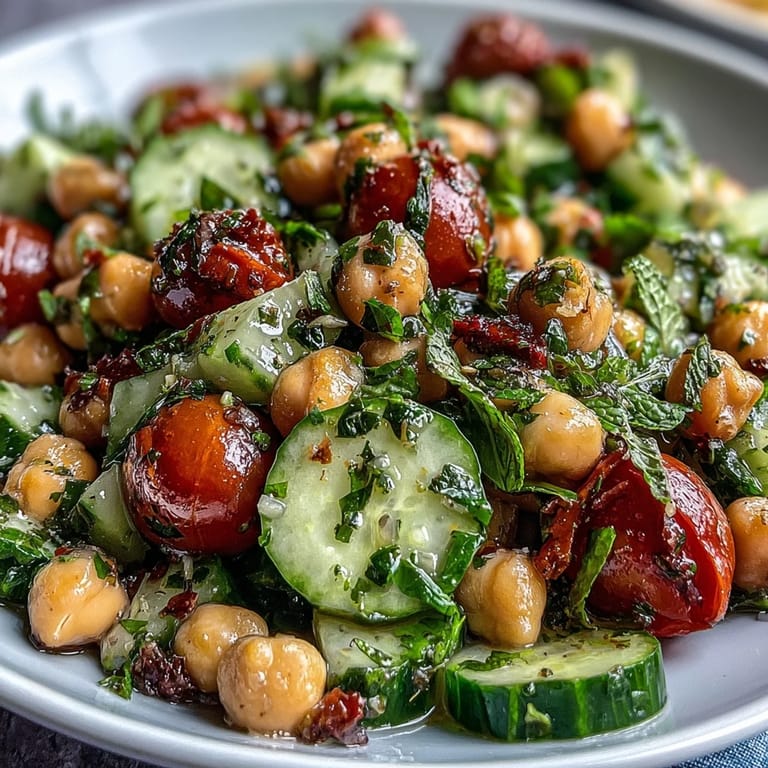
 There's something about a cucumber salad that just feels like summer, even when it's not. I stumbled upon this particular combination on a Tuesday afternoon when my fridge was nearly empty but my farmers market haul was overflowing with crisp vegetables and fresh herbs. The chickpeas came from a forgotten can in the pantry, and somehow tossing them together with a quick lemon vinaigrette felt less like cooking and more like discovering something I'd been wanting all along.
I brought this to a potluck at a friend's apartment last summer, and it somehow lasted longer than the elaborate pasta dishes people had labored over. By the end of the night, someone was literally scraping the bottom of the bowl with a spoon, and I realized that simple, honest food has a way of winning people over. The funny part was watching how many people asked if there was dairy in it, clearly surprised when the answer was no.
Ingredients
- Chickpeas (1 can, 15 oz): These are your protein anchor and the reason this salad actually fills you up; make sure to rinse them well because that starchy liquid is what makes them taste tinny.
- English cucumber (1 large): The thin-skinned variety stays crisp longer and won't water down your salad the way waxy regular cucumbers can.
- Cherry tomatoes (1 cup): Halving them instead of quartering keeps the salad from becoming too wet as they release juice.
- Red onion (1/4 small): Finely diced so it distributes flavor without overpowering or leaving harsh onion chunks that catch you off guard.
- Fresh parsley (1/4 cup): The backbone of the herbs here; don't skip it even if you think it's boring because it adds an earthiness the lemon needs.
- Fresh mint (1/4 cup, optional): This is where the salad shifts from nice to memorable, but only if you're using real mint, not that dried stuff.
- Extra virgin olive oil (3 tbsp): This is not the time to grab the cheap bottle; quality matters when oil is this prominent in the dressing.
- Freshly squeezed lemon juice (2 tbsp): Bottled juice will betray you here by tasting metallic and flat compared to the real thing.
- Lemon zest (1 tsp): This adds brightness that the juice alone can't deliver, so grab a microplane if you don't have one.
- Dijon mustard (1 tsp): A small amount works as an emulsifier and adds subtle sharpness that ties everything together.
- Honey or maple syrup (1/2 tsp, optional): Just a touch to balance the acid without making it sweet; this is one of those moments where less is truly more.
- Sea salt and black pepper: Always taste at the end because the chickpeas and tomatoes already have flavor that affects how much salt you'll actually need.
Tired of Takeout? 🥡
Get 10 meals you can make faster than delivery arrives. Seriously.
One email. No spam. Unsubscribe anytime.
Instructions
- Gather your vegetables and give them a careful look:
- Before you cut anything, make sure your cucumber is firm and your tomatoes are ripe but not soft. This takes about two minutes but makes the difference between a salad that holds up and one that becomes soup.
- Build your salad base:
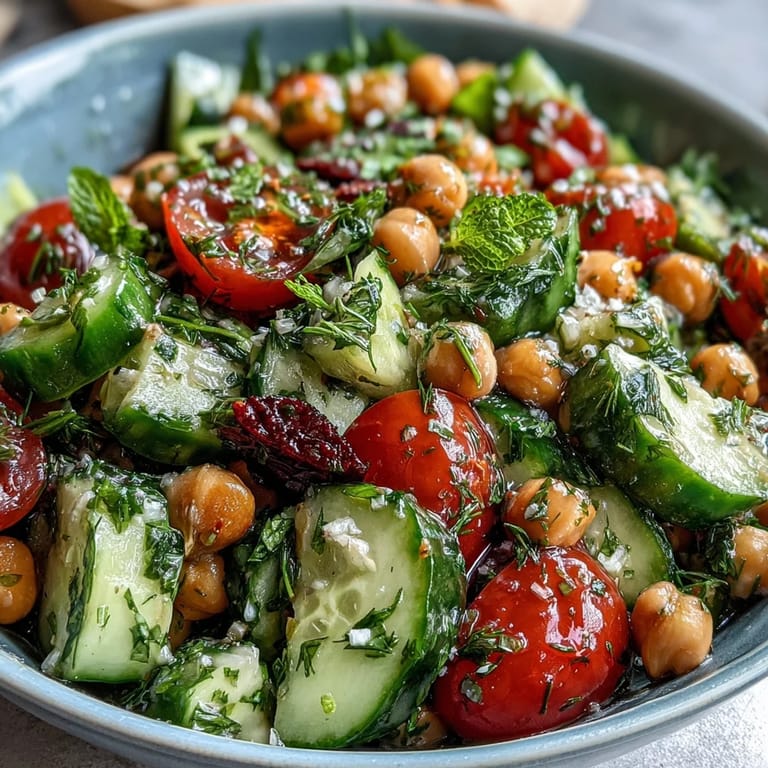
- Toss the drained chickpeas, diced cucumber, halved tomatoes, minced red onion, and fresh herbs together in your largest bowl. Don't worry if it seems like a lot of cucumber; it compacts as it sits and releases just enough liquid to help carry the dressing.
- Make the vinaigrette with intention:
- Combine the olive oil, lemon juice, zest, mustard, and honey in a small bowl or jar, then whisk until it stops looking separated and waxy. The mustard is doing work here by helping the oil and lemon become friends, so make sure it's fully incorporated.
- Dress and taste as you go:
- Pour the vinaigrette over everything and toss gently so you don't bruise the vegetables or chickpeas. This is the moment to taste, and most likely you'll want a pinch more salt than the recipe calls for because the vegetables haven't released their juice yet.
- Let it rest if you have time:
- Serving immediately is fine, but refrigerating for 30 minutes to 2 hours lets the flavors find each other and the salad becomes more cohesive. The vegetables will soften slightly and the dressing will be absorbed rather than just sitting on top.
 Pin this
 This salad has become the dish I reach for when I need something that feels nourishing without feeling like punishment. There's something about that moment when crisp vegetables meet tangy dressing that just makes the day feel lighter, and somehow that matters more than I ever expected a lunch to.
When Fresh Herbs Make or Break You
Dried parsley is not the enemy, but it's not your friend in this salad either. The whole point of this dish is the brightness that comes from fresh herbs hitting cold vegetables, and that brightness disappears the moment you open a jar of something that's been sitting in your cabinet since last winter. If you can't find fresh mint, leave it out rather than substituting dried; the salad will still be wonderful, just slightly less magical.
The Storage Game
This is where the salad becomes genuinely useful rather than just pretty. The moment you combine dressing with vegetables, they start releasing water and the whole thing becomes less crisp, so keeping them separate means you can make this three days ahead and have it taste like you made it this morning. Pour just enough dressing over what you're actually eating and leave the rest in a jar, because the difference between a salad that's still snappy and one that's turned into mush is really just this one small decision.
Making It Yours
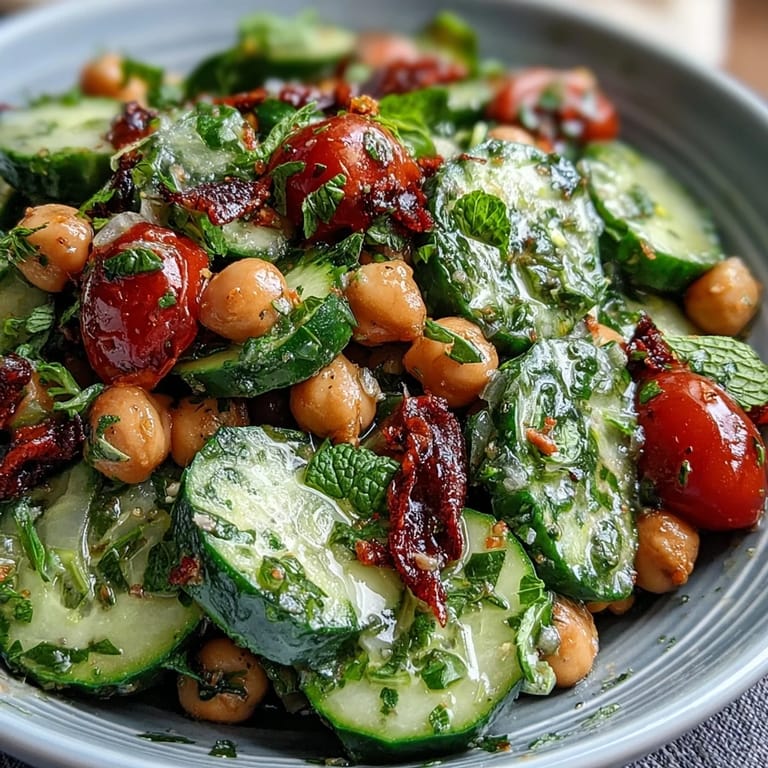
The beauty of this salad is that it's a foundation rather than a rule, and your kitchen doesn't have to look exactly like mine for this to taste wonderful. You could add crumbled feta if dairy isn't off limits, or swap basil for the mint, or throw in some dill if that's what you have on hand. The core of what makes this work is the chickpeas for protein, the fresh vegetables for crunch, and that lemon vinaigrette for brightness, and everything else is just you making it feel like home.
- Adding a handful of arugula or spinach right before serving transforms this into something even more vegetable-forward without changing the prep time.
- If you want it to feel more substantial, crumbled feta or even cooked chicken works beautifully alongside the chickpeas.
- This salad tastes better when the bowl it sits in is cold, so running your serving bowl under cold water before adding the salad makes a surprising difference.
 Pin this
 This is the salad you make when you want to feel good about what you're eating without having to pretend that eating well is a chore. Every time you make it, you might do something slightly different, and that's exactly how it should be.
Recipe FAQs
- → How should I prepare the chickpeas for this salad?
Drain and rinse canned chickpeas thoroughly before mixing to remove excess sodium and improve texture.
- → Can I substitute any herbs in this dish?
Yes, fresh dill or basil can replace parsley and mint to provide different aromatic notes.
- → What is the best way to store the salad for meal prep?
Keep the dressing separate from the salad and combine just before serving to maintain freshness and texture.
- → Can I add any toppings to enhance flavor?
Crumbled feta cheese is a great addition unless following a vegan diet. It adds a creamy, tangy dimension.
- → Is this suitable for gluten-free and vegan diets?
Yes, all ingredients are naturally gluten-free and the salad is vegan when honey is replaced with maple syrup or omitted.