 Pin this
 The first time I made carbonara under pressure, I was cooking for someone who'd just flown in from Rome, and I was convinced I'd mess it up. I'd read too many warnings about scrambled eggs and was terrified of the technique. But then I realized the secret wasn't fear—it was speed and confidence. Now, whenever I need dinner on the table in under twenty minutes without sacrificing flavor, this is what I make. The pasta water is your best friend here, creating a glossy sauce that feels impossibly luxurious for something this simple.
I remember standing in my tiny kitchen at 7 p.m., watching bacon sizzle while pasta water bubbled behind it, and feeling this weird calm wash over me. There's something deeply satisfying about the way the kitchen smells when bacon hits the heat—it fills the whole space with this promise of something good happening soon. My roommate wandered in asking what was for dinner, smelled that bacon, and before I could even answer, they'd grabbed plates. That's when I knew this recipe was a keeper.
Ingredients
- Spaghetti: Two hundred grams of dried pasta—this is the backbone, and al dente texture matters more here than anywhere else because the pasta continues cooking slightly in the residual heat.
- Eggs: Two large eggs are all you need; they'll coat every strand when tossed properly, no cream required.
- Parmesan cheese: Freshly grated is non-negotiable; pre-grated cheese contains anti-caking agents that won't melt as smoothly.
- Black pepper: A quarter teaspoon goes into the egg mixture, but crack fresh pepper over the finished dish for a peppery finish that makes people ask what your secret is.
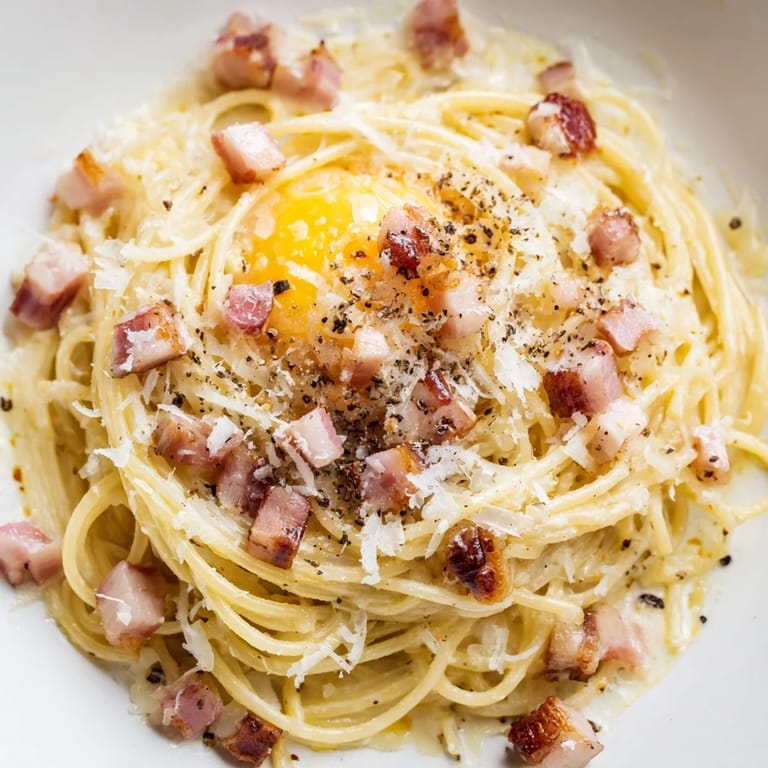
- Bacon or pancetta: One hundred grams diced, cooked until the edges are crispy and it's released all its fat into the pan—this fat is part of your sauce.
- Pasta water: Reserve about eighty milliliters after draining; this starchy liquid is what transforms the eggs from a coating into a silky sauce.
Tired of Takeout? 🥡
Get 10 meals you can make faster than delivery arrives. Seriously.
One email. No spam. Unsubscribe anytime.
Instructions
- Get the water boiling:
- Fill a large pot with salted water—it should taste like the sea. Bring it to a rolling boil before adding pasta.
- Cook the pasta:
- Add spaghetti and cook according to package directions until it's just tender with a slight bite. Before draining, scoop out a measuring cup of that starchy water and set it aside.
- Mix your egg sauce:
- In a bowl, whisk together two eggs, the grated Parmesan, and black pepper until completely combined. This mixture is delicate, so keep it at room temperature until the moment you use it.
- Crisp the bacon:
- While pasta cooks, add diced bacon to a large skillet over medium heat and let it cook undisturbed for the first minute or two so it browns instead of steams. Once golden and crispy all over, about three to four minutes, turn off the heat.
- The crucial toss:
- Drain your hot pasta and add it directly to the skillet with the bacon (the pan is off heat, which is essential). Pour in the egg mixture immediately and toss constantly and vigorously, using tongs or a pasta fork to coat every strand. Gradually add reserved pasta water, a splash at a time, tossing continuously until the sauce turns silky and clings to the pasta.
- Serve right now:
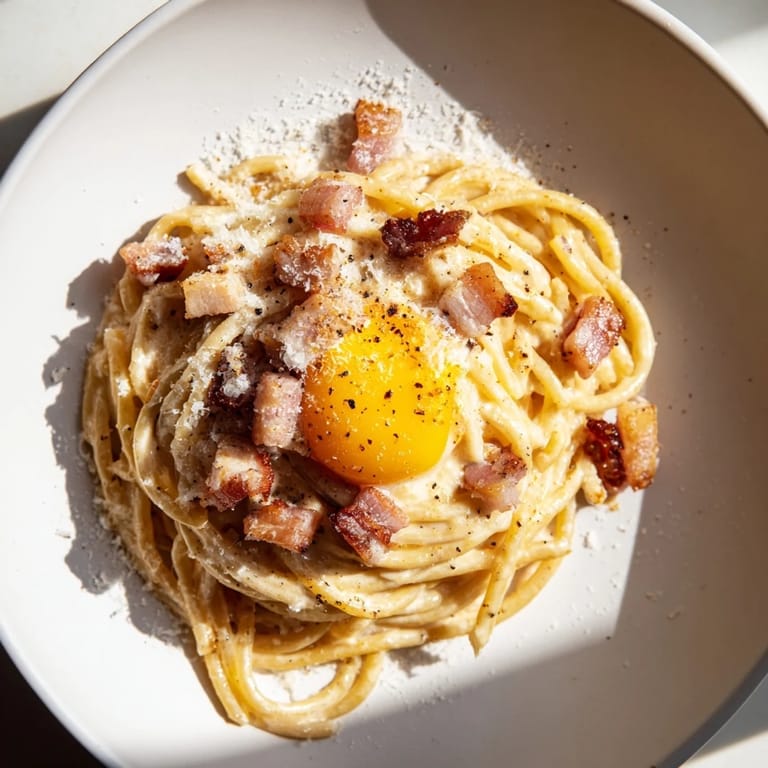
- This dish waits for no one. Plate immediately, shower with extra Parmesan and freshly cracked black pepper, and eat while it's at its glossiest.
 Pin this
 Years later, I made this for someone who'd said they didn't like pasta, and halfway through their plate, they went quiet in that way that means food is hitting right. That's when a dish becomes more than dinner—it becomes proof that simple things, done with intention, can feel like an act of care. This recipe taught me that.
The Italian Way vs. the Quick Way
In Rome, they'd tell you to use Pecorino Romano instead of Parmesan, and honestly, if you want to honor the tradition, they're right—it's slightly tangier and more assertive, which some say is closer to how it should taste. But I've made this with Parmesan dozens of times, and it's never disappointed me. The choice is yours, and either way, you're eating something that tastes like comfort feels.
Small Tweaks That Make a Difference
Once, I added a minced garlic clove to the bacon as it cooked and removed it before tossing the pasta—that subtle garlic note transformed it into something even more memorable. I've also experimented with adding a tiny pinch of nutmeg to the egg mixture, inspired by how Roman cooks sometimes use it, and it adds an almost imperceptible warmth that people notice without being able to name it. The beauty of this recipe is that it's fast enough to make on a weeknight, but flexible enough to play with.
- Infuse the bacon fat with a single crushed garlic clove if you want whispers of flavor without overwhelming the dish.
- A grind or two of nutmeg in the egg mixture adds complexity that no one will be able to identify but everyone will taste.
- If you prefer less pepper punch, reduce to an eighth teaspoon in the sauce and let the finishing crack of black pepper do the talking.
Why This Works as Your Weeknight Dinner
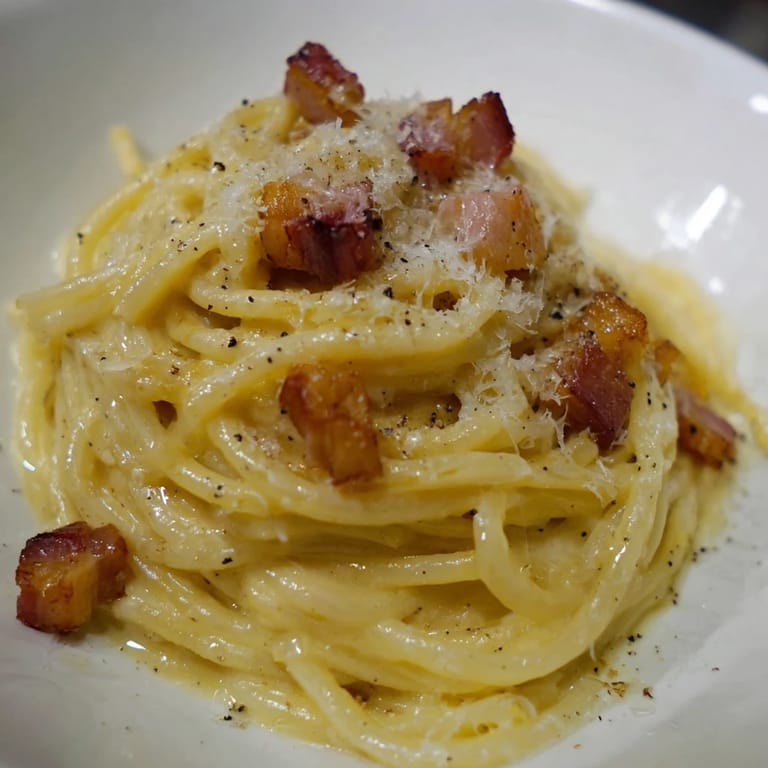
There's something about a recipe that takes less time than ordering delivery but tastes like you've been cooking all afternoon. This is that recipe. It requires no special technique beyond tossing pasta, no expensive ingredients, and no mysterious steps. Everything that makes carbonara feel elegant—the silky sauce, the crispy bacon, the umami punch of Parmesan—comes together because of timing and heat control, not culinary wizardry. Once you've made it twice, it becomes muscle memory.
 Pin this
 Every time I make this, I'm reminded that some of the best meals don't need to be complicated. The kind of dinner that leaves you satisfied and still has you thinking about it hours later—that's what twenty minutes and five ingredients can give you.
Recipe FAQs
- → How do I prevent the eggs from scrambling?
Remove the skillet from heat before adding the egg mixture and toss quickly while adding reserved pasta water gradually. This gentle approach cooks the eggs softly, creating a creamy sauce.
- → Can I substitute the bacon with another ingredient?
Pancetta works great as an alternative for a similar texture and flavor. For a non-pork option, consider smoked turkey or mushrooms for umami richness.
- → Why is reserved pasta water added to the sauce?
The starchy pasta water helps loosen the sauce, ensuring it clings smoothly and creates a velvety texture on the spaghetti.
- → Is Pecorino Romano an appropriate cheese substitute?
Yes, Pecorino Romano offers a saltier, sharper flavor that enhances the dish and adds a traditional touch.
- → What is the best way to cook the bacon for crispiness?
Cook diced bacon over medium heat until golden brown and crispy, typically 3–4 minutes, removing it from the pan promptly to prevent burning.