 Pin this
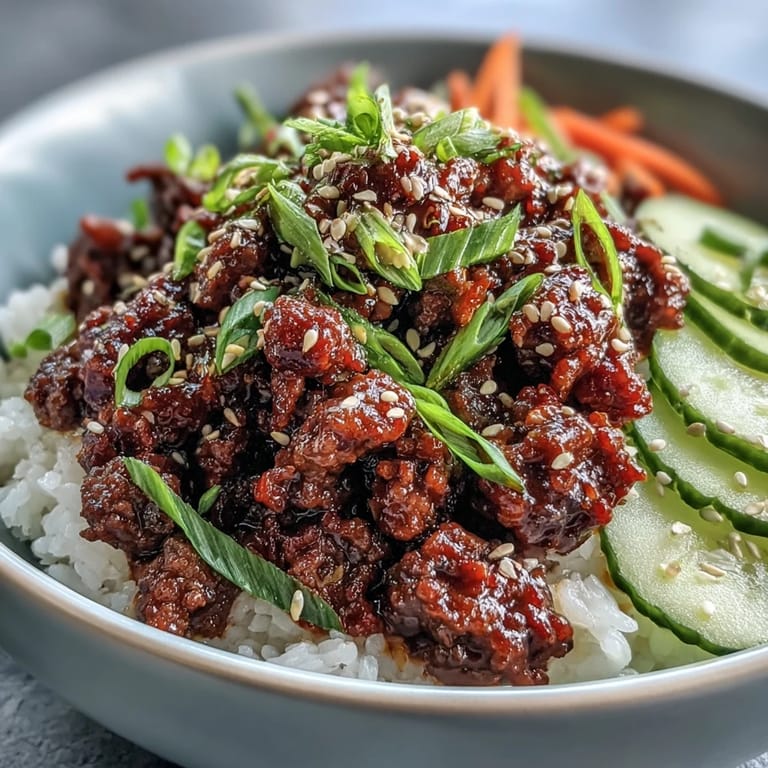
 My neighbor handed me a container of gochujang last summer with zero explanation, just a knowing smile. I stared at that red paste for three days before curiosity won and I threw it into a skillet with ground beef, brown sugar, and whatever else seemed right. Twenty minutes later, my kitchen smelled like a Seoul street market, and I understood why she'd given it to me without a single word. This easy Korean beef bowl became my weeknight answer to takeout cravings, and now I make it so often my family has started calling it "the good bowl."
I made this for my sister's book club potluck thinking it might be too simple to impress, but three people asked for the recipe before they'd even finished their bowls. She's asked me to bring it to literally every gathering since. There's something about serving food that tastes like it took hours but didn't that makes people feel genuinely cared for.
Ingredients
- Lean ground beef: Don't skimp here because the quality of your beef is what carries the whole dish; I learned this the hard way with budget stuff that turned to mush.
- Gochujang: This Korean chili paste is the soul of the bowl, bringing depth and heat without needing to be spicy-scary; find it in the Asian aisle and buy the good kind.
- Low-sodium soy sauce or tamari: The tamari swap works beautifully if you're watching gluten, and honestly, I can't taste much difference anymore.
- Brown sugar: This rounds out the heat with just enough sweetness to make you want another bite.
- Sesame oil: Use the toasted kind and don't go cheap; a little bit goes a long way and transforms everything it touches.
- Garlic and ginger: Fresh, always fresh—they're what make your kitchen smell like a restaurant.
- Rice vinegar: This adds brightness that cuts through the richness and keeps the whole thing from feeling heavy.
- Cooked rice or cauliflower rice: Regular rice is comforting; cauliflower rice is when you want to feel virtuous about dinner.
- Fresh vegetables: Cucumber, carrot, and green onions are crunchy anchors that balance the warm, savory beef; they're not just decoration.
- Toasted sesame seeds: They add a nutty finish that makes people ask what you did differently.
Tired of Takeout? 🥡
Get 10 meals you can make faster than delivery arrives. Seriously.
One email. No spam. Unsubscribe anytime.
Instructions
- Heat the skillet and brown the beef:
- Pour sesame oil into a large skillet over medium-high heat and let it shimmer for a moment. Add your ground beef and break it apart with a spoon as it cooks for 4 to 5 minutes until there's no pink left and it's starting to caramelize at the edges.
- Wake up the aromatics:
- Add minced garlic and grated ginger, then stir constantly for about a minute until your kitchen smells absolutely irresistible. This is when you know it's working.
- Build the sauce:
- Stir in the gochujang, soy sauce, brown sugar, rice vinegar, and black pepper all at once, mixing until the beef is completely coated. Let it simmer for 2 to 3 minutes, watching as the sauce thickens and takes on a glossy shine.
- Taste and adjust:
- This is the moment to be honest about what you want more of—heat, salt, sweetness, tang. I usually add a tiny pinch more brown sugar because I like it balanced.
- Prepare your bowls:
- Divide your rice or cauliflower rice among bowls, making a little nest in the middle for the beef to rest in.
- Finish and garnish:
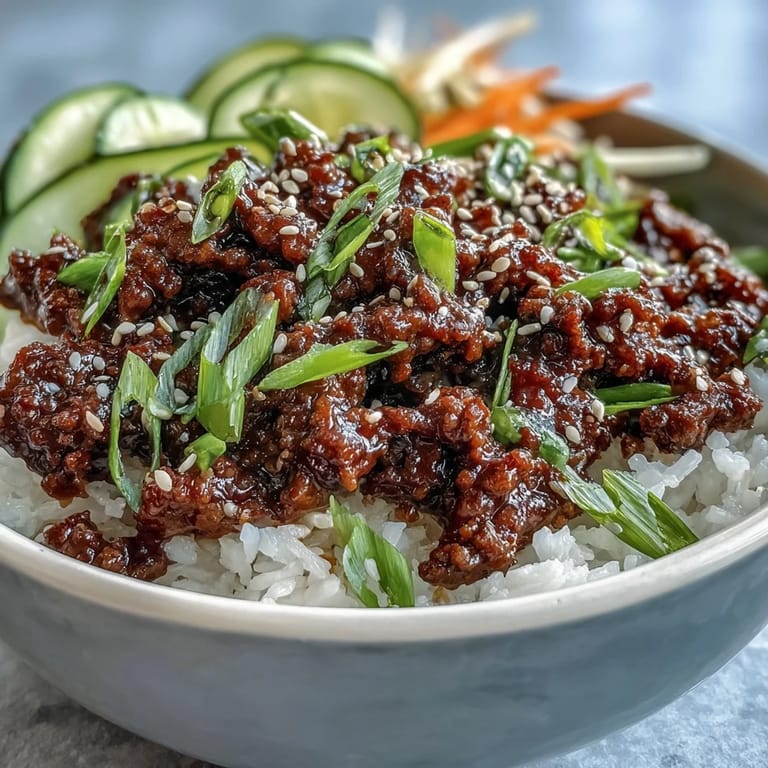
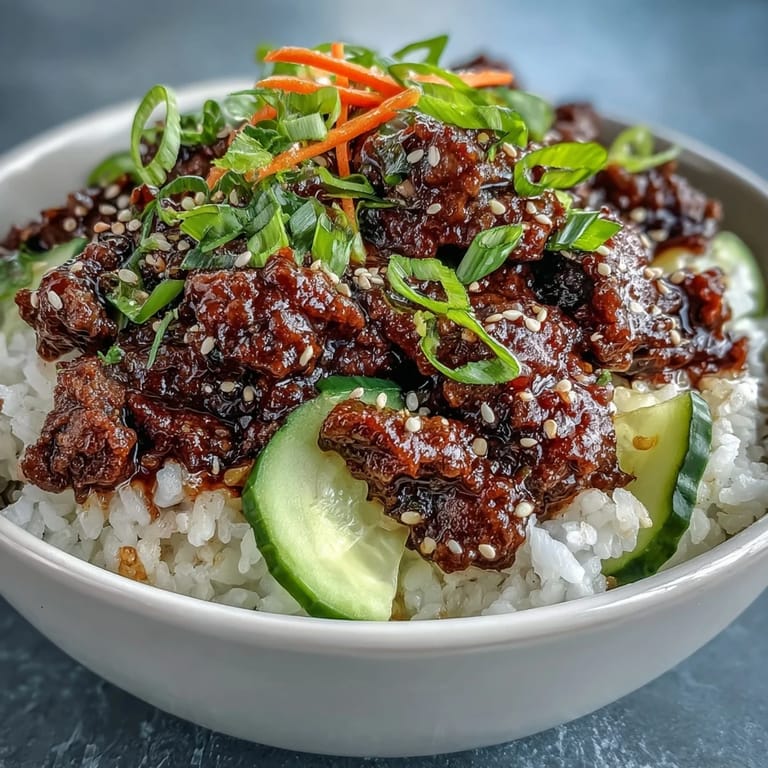
- Spoon the beef and all its beautiful sauce over the rice, then top with cucumber slices, shredded carrot, green onion, and a scatter of sesame seeds. Add fresh chili or kimchi if you're feeling it, then serve right away while everything's still warm.
 Pin this
 My eight-year-old nephew, who usually eats the same three things on repeat, asked for seconds at dinner last month and then wanted to know how to make it himself. We stood at the stove together and he broke up the beef while I handled the sauce, and watching his face light up when he tasted what he'd helped create felt like winning something important. Food like this reminds me that feeding people is really about inviting them into a moment.
Making It Your Own
This bowl is flexible enough to bend to what you have on hand or what you're craving. I've made it with ground turkey when I'm being lean, and it's genuinely just as good. Ground chicken works too, though it needs a tiny bit more sauce since it doesn't have quite the richness of beef. The vegetables are suggestions, not mandates—if you hate cucumbers or can't find fresh carrots, use what you love. I've added shredded red cabbage, bell peppers, even thinly sliced radishes, and every version felt right.
Heat and Spice Levels
The beauty of gochujang is that it brings savory depth without forcing you into a spice corner. If you want more heat, stir in extra gochujang or drizzle some sriracha on top. My family likes it medium, so I stick with the amount called for. If you're cooking for someone who gets nervous about spice, you can dial it back to just a tablespoon of gochujang and nobody will feel left out. The rice and fresh vegetables calm any heat anyway, which is why this bowl manages to feel both bold and approachable.
Storage, Leftovers, and Meal Prep
This is one of those dishes that actually gets better as it sits because the flavors get friendlier with each other. Store the beef and sauce separately from the rice and vegetables in the fridge for up to three days, then reassemble when you're hungry. If you're thinking ahead, you can cook the beef component on Sunday and divide it into containers so you have grab-and-go lunch all week. The rice is best fresh, but cauliflower rice reheats better and keeps its texture if you're planning to make this a regular rotation.
- Reheat the beef gently in a skillet with a splash of water so it doesn't dry out.
- Cook your rice fresh each time if you can, but refrigerated rice works in a pinch.
- Prep your vegetables the night before and keep them in separate containers so they stay crisp.
 Pin this
 This Korean beef bowl has become my reliable answer to Thursday nights, when everyone's tired but nobody wants to order out again. It's proof that good food doesn't need to be complicated to feel special.
Recipe FAQs
- → What does gochujang taste like?
Gochujang is a Korean fermented chili paste with a complex flavor profile that's savory, slightly sweet, and moderately spicy. It has deep umami notes from fermentation and a thick, rich consistency that coats beautifully.
- → Can I make this less spicy?
Absolutely. Start with 1 tablespoon of gochujang and taste before adding more. You can also increase the brown sugar slightly to balance the heat, or serve with extra cucumber and rice to temper the spice level.
- → Is cauliflower rice a good substitute?
Cauliflower rice works exceptionally well here. Its mild flavor lets the spiced beef shine, and the texture contrasts nicely with the tender meat. It reduces carbs significantly while keeping the bowl satisfying.
- → How long does this keep in the refrigerator?
The cooked beef will stay fresh for 3-4 days when stored in an airtight container. Reheat gently with a splash of water to refresh the sauce. Store toppings separately and assemble when ready to serve.
- → Can I use a different protein?
Ground turkey, chicken, or pork all work beautifully in this dish. Cooking times remain similar, though leaner meats may need a teaspoon of oil to prevent sticking. The sauce flavors complement any protein well.
- → What can I serve alongside this bowl?
Kimchi is the classic accompaniment, adding tangy fermentation and crunch. A simple cucumber salad, pickled vegetables, or steamed bok choy also make excellent sides to round out the meal.