 Pin this
 The first time I made bulgogi was on a Tuesday night when I needed something fast but comforting. I had just bought a cast iron skillet and wanted to test it on something that would sizzle and sear properly. The smell of sesame oil hitting hot metal filled my tiny apartment, and I knew this was going to become a regular thing. That night I ate standing up at the counter, too impatient to bother with a proper bowl setup.
I served this to my cousin who claimed she hated Korean food after one bad takeout experience. She took one suspicious bite, eyes widened, and asked for seconds. Now she texts me every other week asking when I am making the beef bowls again. Watching someone rewrite their entire opinion on a cuisine in one meal is pretty satisfying.
Ingredients
- Beef sirloin or ribeye (500 g): Thinly slice this against the grain when it is slightly frozen for easier cutting. Ribeye has more marbling and stays tender, but sirloin works well too.
- Soy sauce (3 tbsp): This provides the salty base of the marinade. Use low sodium if you are watching salt intake.
- Brown sugar (2 tbsp): The molasses in brown sugar helps the beef caramelize beautifully in the hot pan.
- Sesame oil (1 tbsp): Toasted sesame oil is non negotiable here for that authentic Korean flavor.
- Rice vinegar (1 tbsp): Adds brightness and helps tenderize the meat.
- Garlic (2 cloves): Minced fresh garlic makes a difference. Do not use the jarred stuff.
- Ginger (1 thumb sized piece): Grate this finely so it dissolves into the marinade instead of leaving chewy bits.
- Pear (1): Asian pear is traditional because enzymes tenderize the meat, but a firm sweet apple works in a pinch.
- Gochujang (1 tbsp): Korean chili paste adds depth and mild heat. Omit if you are spice sensitive.
- Scallions (2 plus more for garnish): Finely sliced into the marinade and saved fresh for topping.
- Toasted sesame seeds (1 tbsp plus garnish): These add crunch throughout the dish and on top.
- Black pepper (1/4 tsp): Freshly cracked makes a noticeable difference.
- Cooked rice (2 cups): Jasmine or short grain white rice holds up best under the hot beef and sauce.
- Carrot (1 cup): Julienned into thin matchsticks for crunch and color.
- Cucumber (1 cup): Slice into matchsticks. English cucumbers work well because they have fewer seeds.
- Bean sprouts (1 cup): Blanch these quickly in boiling water so they stay crisp.
- Kimchi (1 cup): Optional but highly recommended for that authentic Korean bowl experience.
Tired of Takeout? 🥡
Get 10 meals you can make faster than delivery arrives. Seriously.
One email. No spam. Unsubscribe anytime.
Instructions
- Mix the marinade:
- Combine soy sauce, brown sugar, sesame oil, rice vinegar, garlic, ginger, grated pear, gochujang, scallions, sesame seeds, and black pepper in a large bowl. Whisk until the sugar dissolves completely.
- Marinate the beef:
- Add the thinly sliced beef and toss until every piece is coated. Cover and let it sit for at least 15 minutes, or up to an hour if you have time.
- Heat your pan:
- Get a large skillet or wok screaming hot over high heat. You want to hear the beef sizzle the second it hits the metal.
- Stir fry in batches:
- Cook the beef in batches without crowding the pan, about 2 to 3 minutes per batch until just cooked through and lightly caramelized.
- Build your bowls:
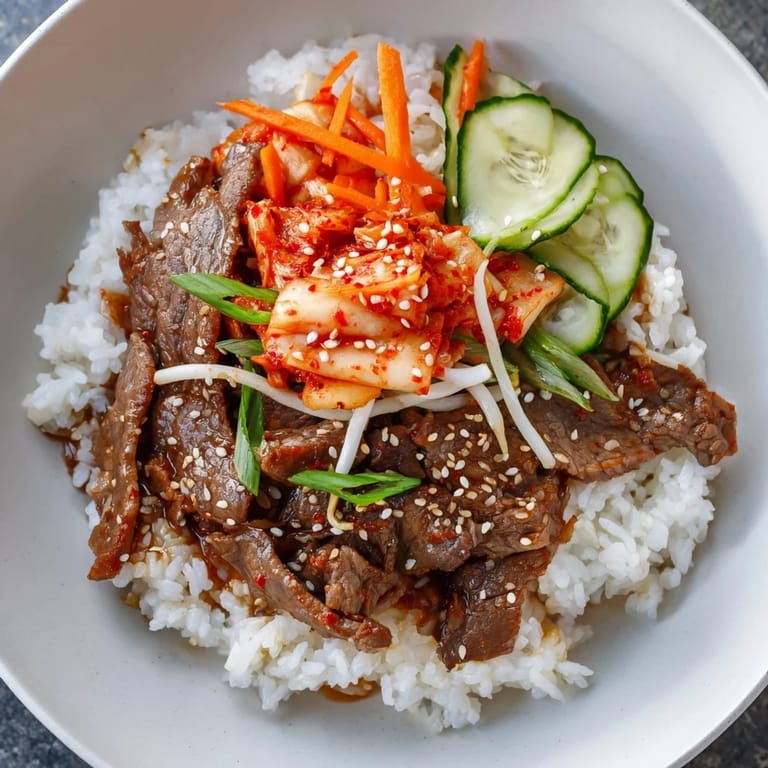
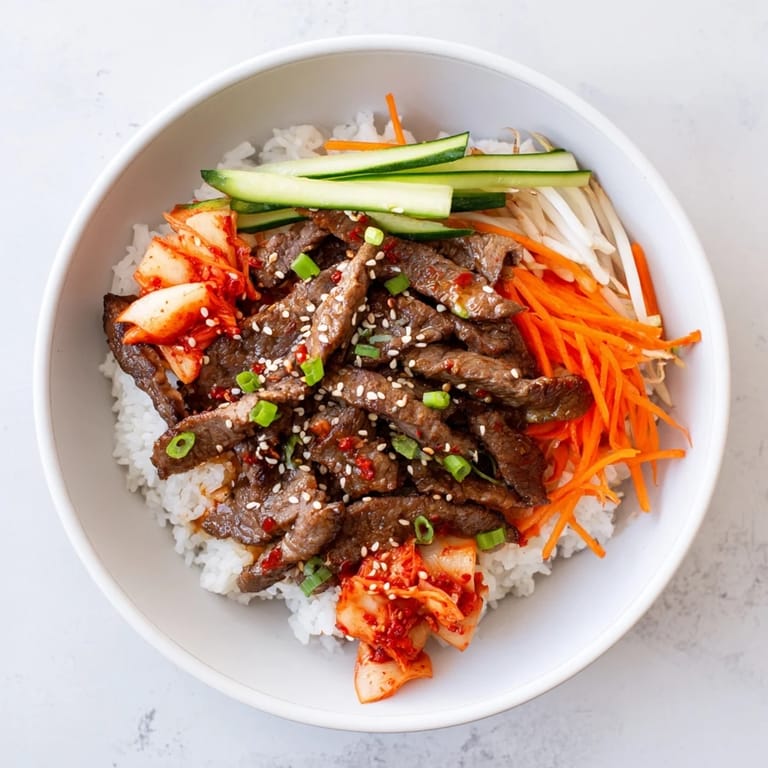
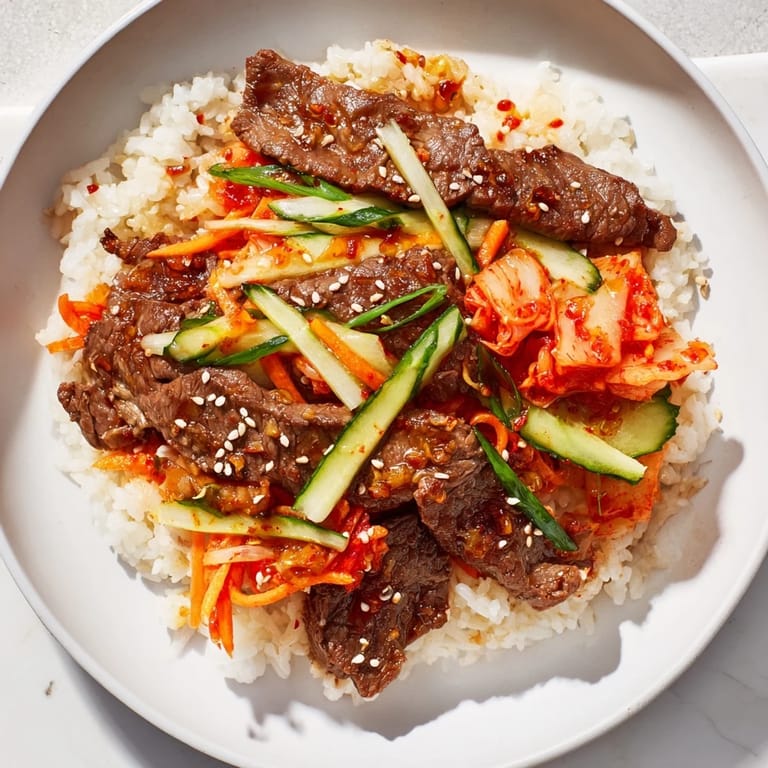
- Divide rice among four bowls and arrange the beef, carrot, cucumber, bean sprouts, and kimchi on top in sections.
- Finish and serve:
- Sprinkle with extra scallions and sesame seeds. Serve immediately while the beef is still hot and sizzling.
 Pin this
 This recipe saved me during a month when I was working late nights and had zero energy for elaborate cooking. I would marinate the beef in the morning, come home exhausted, and have dinner ready in ten minutes. My roommate started timing her arrival to coincide with bulgogi night.
Making It Your Own
Once you have the basic marinade down, this dish adapts easily to whatever you have on hand. I have made it with mushrooms added to the beef, swapped carrots for bell peppers, and even used cauliflower rice when I was avoiding grains. The core flavors work with almost anything.
Meal Prep Secrets
The marinade actually improves the beef overnight, so you can prep everything the night before and just stir fry when you are ready to eat. I keep cooked rice in the fridge and prepped vegetables in containers so assembly takes literally two minutes. This has become my go to for Sunday meal prep.
Serving Ideas
A fried egg on top with a runny yolk creates a sauce that ties everything together. Some nights I add quick pickled radishes or spinach sauteed with garlic. If you want something lighter, serve the beef over lettuce leaves instead of rice.
- Heat leftover beef in a pan with a splash of water to refresh the sauce
- Extra gochujang on the side lets everyone control their spice level
- The flavors develop overnight, so leftovers are often better the next day
 Pin this
 This is the kind of meal that makes people think you spent way more time and effort than you actually did.
Recipe FAQs
- → What cut of beef works best for this dish?
Choose tender, quick-cooking cuts like ribeye or sirloin, sliced thinly for even cooking.
- → How long should the beef marinate?
Marinate for at least 15 minutes to infuse flavor; up to 1 hour enhances richness without toughening.
- → Can I make this dish spicier?
Yes, add gochujang chili paste to the marinade for a gentle heat that complements the sweet and savory flavors.
- → What rice varieties suit this bowl?
Use cooked jasmine or short-grain white rice for a slightly sticky texture that pairs well with the beef and vegetables.
- → Are there good alternatives to rice?
Cauliflower rice is a low-carb substitute that maintains a similar texture and absorbs the marinade's flavors nicely.
- → How can I add extra richness to this dish?
Topping the bowl with a fried egg adds a creamy texture and depth of flavor.