 Pin this
 I discovered egg crepes by accident on a Tuesday morning when I'd overslept and had nothing but eggs in my fridge. A friend had mentioned blending eggs for omelets, and I thought: why not make it thinner, lighter, more elegant? Twenty minutes later, I had these delicate, protein-packed wraps that tasted like I'd spent an hour in the kitchen. Now they're my go-to when I want something that feels special but requires almost no effort.
The first time I made these for guests at a casual brunch, I was nervous about flipping the crepes without tearing them. But there's something almost meditative about watching that thin layer of egg set in the pan, the edges beginning to pull away from the heat. When that first crepe slid onto a plate intact, my confidence soared. By the second batch, my hands had remembered what they were doing, and everyone got warm crepes that looked far more impressive than the five minutes of actual cooking time suggested.
Ingredients
- Eggs (4 large): The foundation—blending them creates tiny air pockets that make these crepes tender and almost cloud-like, nothing like a thick omelet.
- Water or milk (2 tablespoons): Adds the slightest richness and helps the batter flow evenly across the pan; dairy or non-dairy both work beautifully.
- Salt and black pepper (pinches): Just enough to wake up the eggs without making them taste savory if you decide to fill them with berries instead.
- Olive oil or butter (1 teaspoon): A light brush prevents sticking and gives the crepes a gentle golden edge that tastes wonderful.
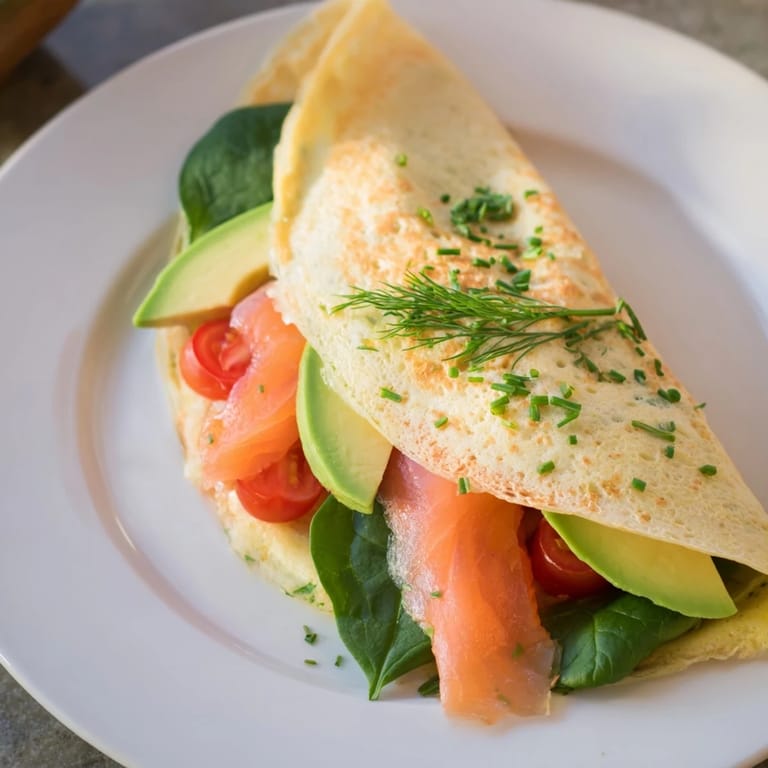
- Fillings (your choice): Baby spinach, smoked salmon, feta, tomato, avocado, and fresh herbs transform these blank crepes into whatever you're craving that morning.
Tired of Takeout? 🥡
Get 10 meals you can make faster than delivery arrives. Seriously.
One email. No spam. Unsubscribe anytime.
Instructions
- Blend until frothy:
- Crack your eggs into the blender with water, salt, and pepper, then blend on high for 30 to 45 seconds. You want it so aerated that it looks almost mousse-like—that's what makes them light and delicate.
- Heat your pan:
- Set a non-stick skillet to medium heat and brush it with just a whisper of oil or butter. Test the heat by flicking a drop of water on it; it should sizzle gently, not violently.
- Pour and tilt:
- Pour half the egg mixture into the center of the pan and immediately tilt and rotate the skillet so the batter spreads thin and even, like a crepe. Work quickly—the batter sets fast.
- Cook the first side:
- After 1 to 2 minutes, the edges should lift away easily and the bottom should be set and pale golden. If it's still too wet in the center, give it another 30 seconds.
- Flip and finish:
- Using a spatula, carefully flip the crepe and cook the other side for just 30 seconds. You're not looking for color; you just want to set the top side.
- Make the second crepe:
- Slide the first crepe onto a plate and repeat the process with the remaining batter. If your pan needs a tiny touch more oil, add it now.
- Fill and fold:
- Arrange your chosen fillings in a line down the center of each warm crepe. Fold it gently, like wrapping a present, and serve immediately while the crepe is still soft and pliable.
 Pin this
 I'll never forget the moment my five-year-old niece took her first bite of an egg crepe filled with strawberries and whipped cream. Her eyes went wide like I'd performed magic. Suddenly this simple breakfast became the thing she asked for every time she visited, and I realized that sometimes the most memorable meals are the ones that feel effortless to make.
Sweet or Savory: You Decide
The beauty of these crepes is their flexibility. For breakfast, go savory with smoked salmon, fresh dill, and a squeeze of lemon. For brunch or dessert, fill them with berries, a dollop of Greek yogurt, and a drizzle of honey. I've even made a version with caramelized bananas and a tiny sprinkle of cinnamon that disappeared in minutes. The egg crepe is truly whatever you want it to be.
Why This Method Works
Blending the eggs isn't just a shortcut—it's a game-changer. When you aerate the eggs in a blender, you're creating thousands of tiny air bubbles that make the cooked crepe tender and light instead of dense or rubbery. It's the same principle pastry chefs use in soufflés, just applied to something quick and everyday. I learned this the hard way after trying to whisk by hand and ending up with crepes that felt more like thin omelets. Once I started blending, everything changed.
The Timing Is Everything
These crepes live in a sweet spot between too-wet and too-cooked. The moment the edges lift away from the pan is your signal that the bottom is set but still tender. Flip too soon and the crepe falls apart; wait too long and it becomes rubbery. I've learned to watch for that exact moment rather than timing by the clock, and now I can feel it almost instinctively. It takes maybe two crepes to get the hang of it, and then you're golden for life.
- Set your burner to medium, not high—gentle, consistent heat gives you more control and time to react.
- Keep a plate warming nearby so your crepes stay soft and pliable when you're ready to fill them.
- If you're making them for a crowd, stack the finished crepes on the warm plate and cover loosely with foil to keep them soft.
 Pin this
 These crepes remind me that some of the best meals don't require complexity, just intention and a few good ingredients. Whether you're feeding yourself on a weekday morning or impressing people at brunch, they deliver every time.
Recipe FAQs
- → How do I make the egg batter light and frothy?
Blend eggs with water or milk on high speed for 30–45 seconds until very frothy to incorporate air and lighten the texture.
- → What is the best method to cook thin crepes evenly?
Use a non-stick skillet over medium heat and brush lightly with oil or butter, pouring the batter thinly and tilting the pan to spread evenly.
- → Can I customize fillings with different ingredients?
Yes, fillings like spinach, smoked salmon, cheese, tomato, and herbs can be mixed or matched to suit savory or sweet tastes.
- → How do I prevent the crepe from sticking to the pan?
Ensure the skillet is well heated and lightly greased with olive oil or butter before adding the batter.
- → Is this crepe suitable for low-carb diets?
Yes, the crepe is naturally low in carbohydrates, especially when using water or dairy-free milk and choosing low-carb fillings.